Dental Implant Abutments: Complete Guide for Dentists
Dental implant restorations depend on much more than implant placement alone. One of the most important restorative components is the abutment — the part that connects the implant fixture to the final crown, bridge, or prosthesis. Abutment selection affects tissue support, emergence profile, crown contour, margin placement, retrievability, hygiene access, and long-term restorative stability.
In straightforward cases, a stock abutment may be acceptable. In more demanding cases, a custom abutment often provides greater control and a more predictable restorative result. This page explains what implant abutments are, what types are used today, what materials are available, and how dentists can choose the right option for each case.
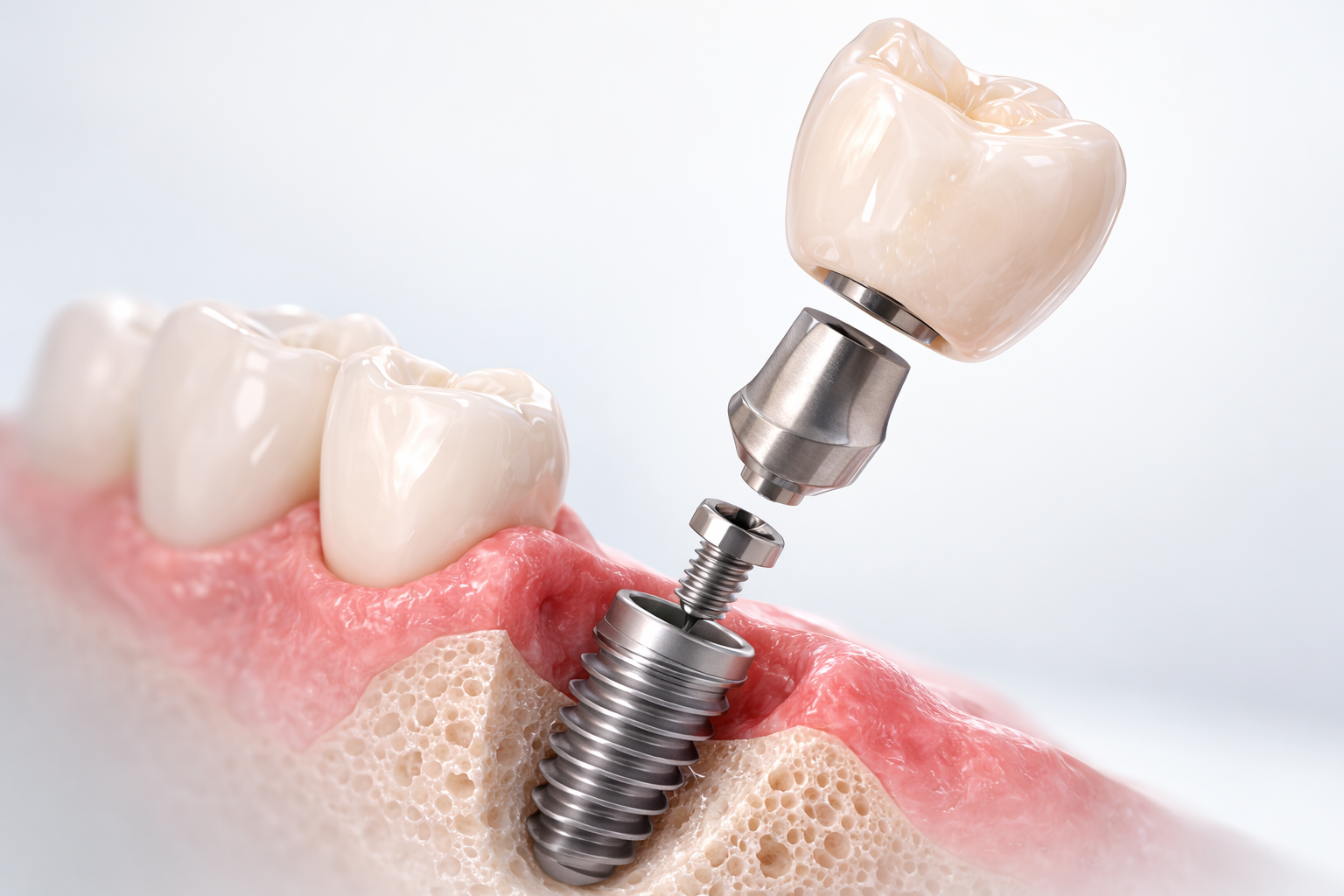
What Is a Dental Implant Abutment?
A dental implant abutment serves as the connector between the implant and the final prosthesis. In a standard single-unit restoration, the clinician places the implant fixture in the bone, attaches the abutment to the implant, and then secures or builds the final crown on top of the abutment.
The abutment is not just a connector. It influences how the final restoration emerges through the soft tissue, how the crown is supported, how margins are positioned, and how forces are distributed during function. It also affects how easy the case will be to clean, maintain, and restore over time.
A well-chosen abutment helps the final restoration look more natural, function more predictably, and remain easier to service in the future. A poorly chosen abutment can create limitations that affect both esthetics and biology.
Why Abutment Selection Matters
Many implant cases succeed surgically but still become compromised at the restorative stage. One of the reasons is that abutment selection is sometimes treated as a routine detail instead of a major prosthetic decision.
The type of abutment used can affect:
- how natural the crown looks,
- how the soft tissue is supported,
- how easy excess cement is to remove,
- how cleanable the restoration will be,
- how much chairside adjustment is needed,
- how predictable the final fit will be.
This is especially important in the esthetic zone, in thin tissue cases, and whenever implant positioning is less than ideal. In those situations, the abutment often becomes one of the key elements that determines whether the final result looks average or highly refined.
Main Types of Implant Abutments
There are several main types of implant abutments used in modern restorative dentistry.
Stock abutments are prefabricated components available in standard sizes and shapes. They are commonly used because they are simple, cost-effective, and easy to access. They can work well in posterior cases when implant position is ideal and esthetic demands are limited.
Custom abutments are individually designed for a specific patient and implant position. Abutment selection is also strongly influenced by how the implant is placed, since implant position affects abutment choice in terms of angulation, load distribution, and esthetics. They are usually created from digital scans and fabricated through CAD/CAM technology. They allow better control over emergence profile, tissue support, crown contour, and margin placement.
Soft tissue shaping can be significantly improved with the use of custom healing abutments, which help guide gingival architecture during healing. Healing abutments are used during the healing stage to shape the soft tissue around the implant. They are not the same as final restorative abutments, but they strongly influence how the tissue develops before the definitive crown is delivered.
Temporary abutments may be used for provisional restorations when tissue shaping or esthetic conditioning is needed before the final restoration is made.
Straight abutments are used when implant position and restorative path are favorable. Angled abutments help correct implant angulation when the implant trajectory is not ideal for the final prosthetic result.
Stock vs Custom Abutments
The most important difference between stock and custom abutments is not simply how they are manufactured. The real difference is how much control the dentist and lab have over the restorative result.
A stock abutment can be a practical solution when:
- the implant is well positioned,
- the case is posterior,
- tissue conditions are simple,
- esthetic expectations are moderate,
- workflow speed is important.
A custom abutment becomes more valuable when:
- the implant is slightly angled or too facial,
- the case is in the esthetic zone,
- the tissue profile is asymmetrical,
- margin placement needs more control,
- the final crown would otherwise be overcontoured,
- the dentist wants a more natural and precise transition from implant to crown.
Custom abutments often help create a cleaner emergence profile, better tissue adaptation, and more predictable final contour. In high-value or highly visible cases, that extra control often makes a meaningful difference. Another key decision is choosing between prefabricated and customized solutions, as discussed in stock vs custom abutments, where clinical flexibility and precision play a major role.
Abutment Materials
When selecting an abutment material, clinicians often compare options like titanium and zirconia, each offering different advantages in strength and esthetics. A deeper understanding of titanium vs zirconia abutments helps guide this decision.
Titanium abutments remain the most widely used because titanium is strong, durable, biocompatible, and reliable under functional load. It is often the first choice in posterior cases and in situations where strength is the main priority.
Zirconia abutments are more often considered when esthetics matter more. Their tooth-colored appearance may help reduce gray shine-through under thin gingiva, especially in anterior restorations. Zirconia can be used as a full abutment material or combined with a titanium base depending on the restorative design.
In general, titanium is often preferred for strength-dominant cases, while zirconia may be preferred for esthetic-sensitive cases. The final choice should always depend on implant position, tissue thickness, functional risk, and restorative goals.
Soft Tissue and Emergence Profile
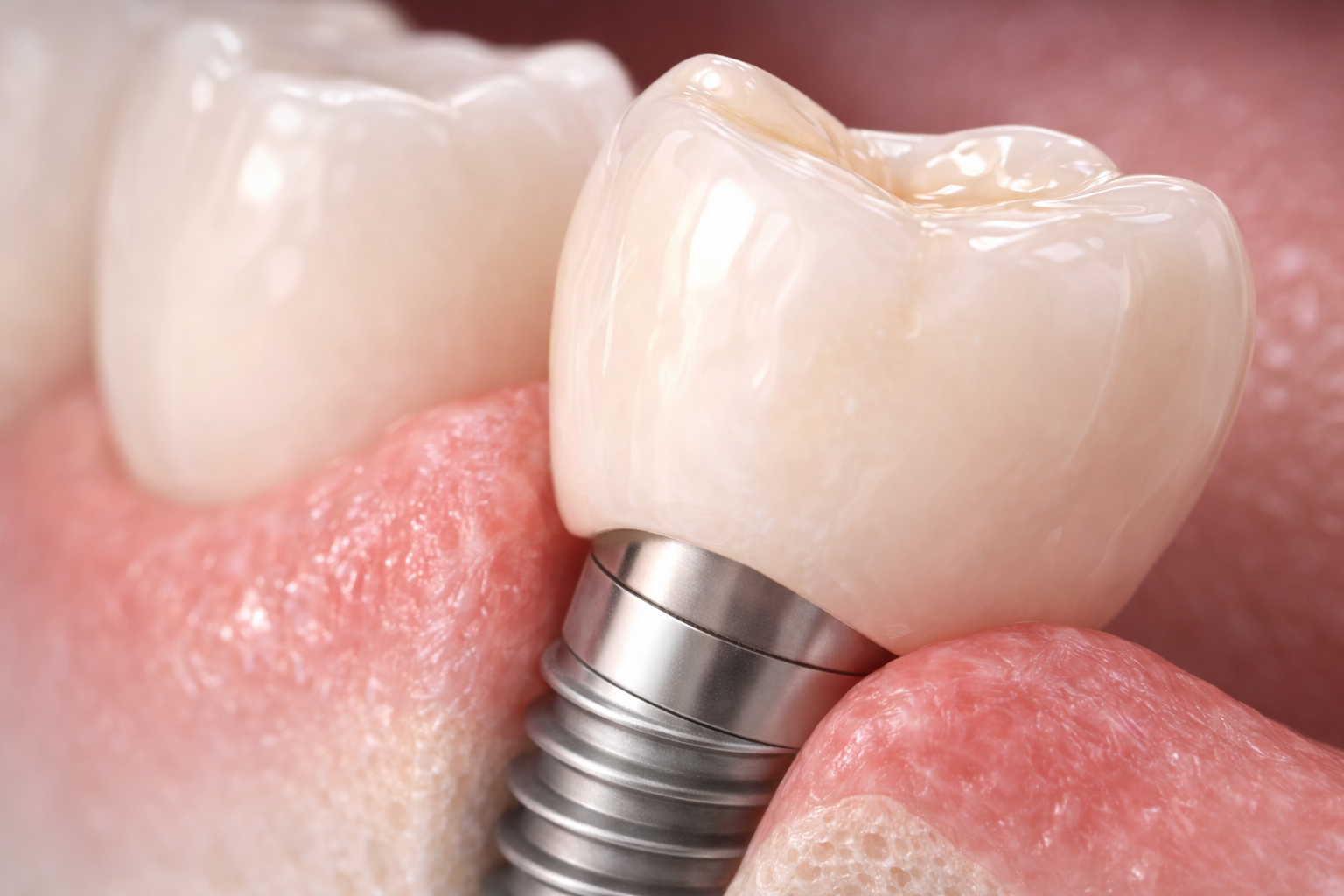
One of the biggest restorative advantages of a well-designed abutment is better soft tissue management. The emergence profile is not just an esthetic detail — it affects the way the crown rises through the gingiva, how natural the restoration looks, and how easy it is for the patient to clean around it.
If the abutment does not support the tissue properly, the crown may need to be overcontoured to compensate. That can create a bulky restoration, make hygiene more difficult, and negatively affect tissue stability over time.
Custom abutments are especially useful in cases where soft tissue support matters. They allow the restoration to emerge in a more natural way and can help improve cervical contour, symmetry, and long-term tissue adaptation.
This becomes especially important in anterior cases, thin biotypes, high smile lines, and any case where the final esthetic result needs to look refined and natural. The shape of the restoration as it exits the soft tissue is critical, making the implant emergence profile a key factor in both esthetics and hygiene.
Digital Workflow
Digital workflow has significantly improved the way implant abutments are planned and fabricated. Instead of relying only on conventional impressions and manual restorative corrections, modern implant dentistry increasingly relies on digital workflow for implant abutments to improve precision, efficiency, and consistency.
A digital implant-abutment workflow may include:
- intraoral scanning,
- scan bodies,
- digital implant libraries,
- CAD design,
- custom emergence planning,
- margin positioning,
- CAD/CAM milling,
- digital communication between clinic and lab.
This workflow helps improve restorative planning in several ways. It allows the lab to design the abutment around the intended crown form instead of treating the abutment and the crown as separate steps. It often reduces chairside adjustments, improves communication between the dentist and the lab, and creates a more repeatable workflow for implant restorations.
For practices that regularly send digital cases, this can also improve speed, clarity, and long-term predictability.
How to Choose the Right Abutment
Choosing the right abutment requires looking at the full restorative picture, not just the implant connection.
The dentist should evaluate:
- implant position,
- implant angulation,
- tissue thickness,
- smile line,
- restorative space,
- retention type,
- esthetic expectations,
- occlusal load,
- maintenance needs.
In a simple posterior case with favorable implant placement, a stock titanium abutment may be entirely reasonable. In a visible anterior case with thin tissue and higher esthetic demands, a custom abutment usually offers stronger restorative control.
The best abutment is the one that supports the final restoration biologically, mechanically, and esthetically — while also making the case easier to maintain over time.
Common Mistakes in Abutment Planning
A common mistake is choosing a stock abutment by default without evaluating whether the case would benefit from a custom design. This can be acceptable in simple posterior cases, but it can create restorative compromises in more demanding situations.
Another frequent problem is underestimating soft tissue behavior. If tissue contour and emergence profile are not considered early, the final crown may need to compensate with excessive contour, making the restoration less natural and harder to clean.
Deep margin placement is another issue. If margins are positioned too deep in cement-retained cases, excess cement becomes harder to detect and remove. Over time, this can increase biological risk around the implant.
Poor communication with the lab can also reduce the quality of the result. Implant system details, scans, tissue photos, shade preferences, and restorative goals all improve the lab’s ability to design a more accurate and useful abutment.
Conclusion
Dental implant abutments are not a minor technical detail. They are one of the central restorative decisions in implant dentistry and can strongly influence esthetics, tissue support, hygiene, contour, and long-term predictability.
Stock abutments remain a practical option in straightforward cases. Custom abutments become increasingly valuable as case complexity, esthetic demand, and tissue sensitivity increase. When selected properly, the abutment helps create a restoration that not only fits well on the day of delivery, but also performs better over time.
As implant workflows become more digital and more restorative-driven, abutment planning should receive the same level of attention as the implant placement itself.
FAQ
What is a dental implant abutment?
A dental implant abutment is the connector between the implant fixture and the final restoration. It supports the crown, bridge, or prosthesis and helps shape the way the restoration emerges through the soft tissue.
What is the difference between stock and custom abutments?
Stock abutments are prefabricated in standard shapes and sizes. Custom abutments are designed for the specific patient and implant position, allowing more control over contour, tissue support, and esthetics.
When is a custom abutment a better choice?
A custom abutment is often the better choice in esthetic cases, thin tissue cases, non-ideal implant positions, and situations where better margin control or emergence profile is needed.
Which is better: titanium or zirconia abutments?
Titanium is generally preferred for strength and posterior function. Zirconia is often preferred in esthetic-sensitive areas where a tooth-colored material offers visual advantages.
Why does emergence profile matter?
Emergence profile affects how naturally the restoration comes through the gingiva, how easy it is to clean, and how refined the final esthetic result appears.
Why is digital workflow important for abutment planning?
Digital workflow can improve precision, communication, restorative consistency, and the accuracy of custom abutment design.