Abutment Margin Placement in Implant Restorations
Proper abutment margin placement is one of the most important technical decisions in implant prosthetics. The position of the margin affects cement control, tissue health, restorative design, and long-term maintenance.
While many clinicians focus on the implant itself, the prosthetic design stage often determines the final outcome. When margins are placed too deep or too shallow, complications such as cement retention, tissue irritation, and restoration instability may occur.
Understanding where and how to position abutment margins helps clinicians achieve more predictable implant restorations.
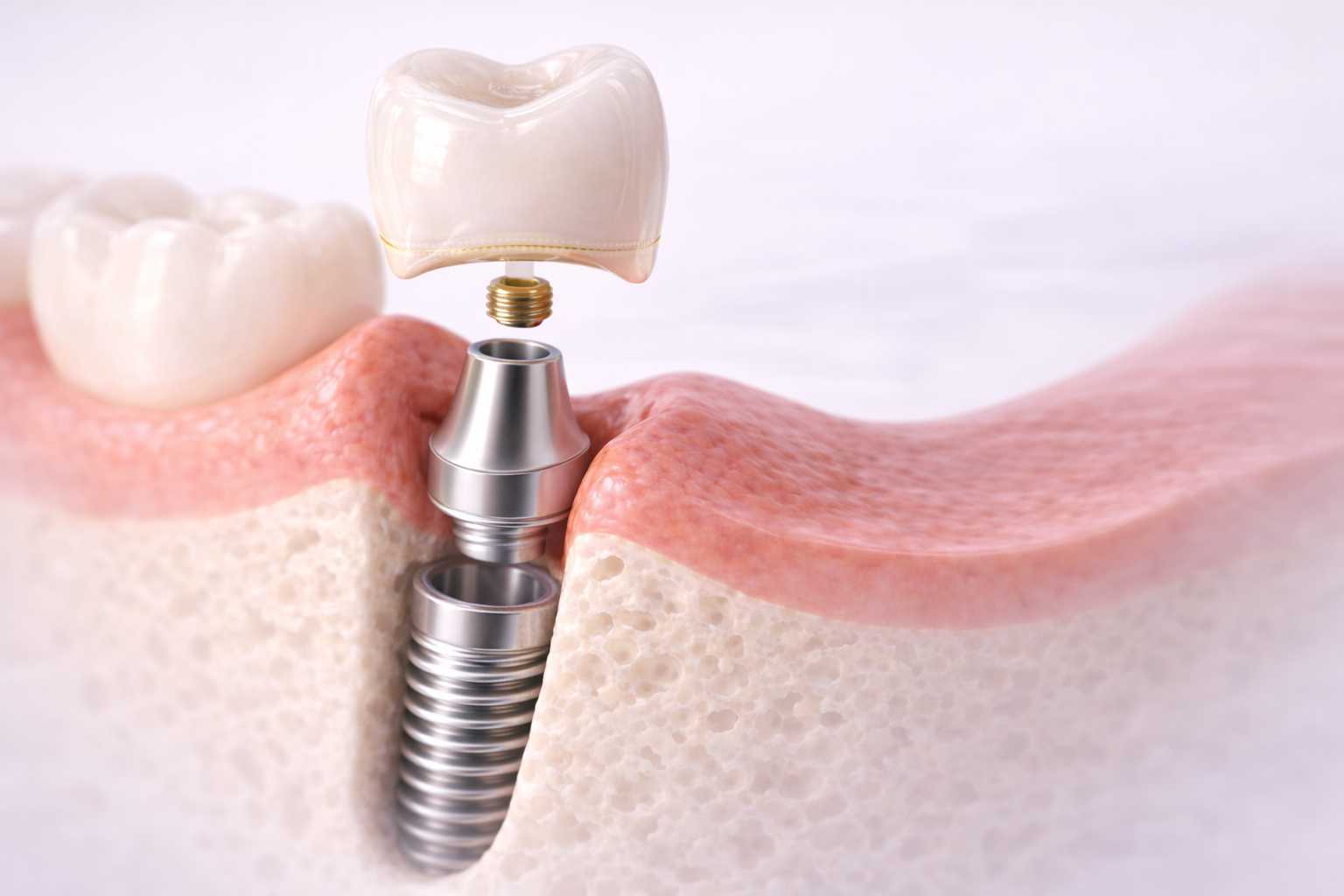
Why Margin Placement Matters in Implant Prosthetics
In natural teeth, crown margins are often placed slightly below the gingival margin for aesthetic reasons. However, implant restorations behave differently because implants do not have a periodontal ligament and the surrounding tissue reacts differently to restorative materials.
Incorrect margin placement can lead to:
- excess cement trapped under soft tissue
- inflammation around the implant
- peri-implant disease
- difficulty cleaning the restoration
This is why prosthetic planning must consider both the implant position and the restorative design.
For example, implant position often determines whether margin placement will be accessible for cement removal. Read more about how implant position affects prosthetic decisions in How Implant Position Affects Abutment Choice.
The Relationship Between Abutment Design and Margin Placement
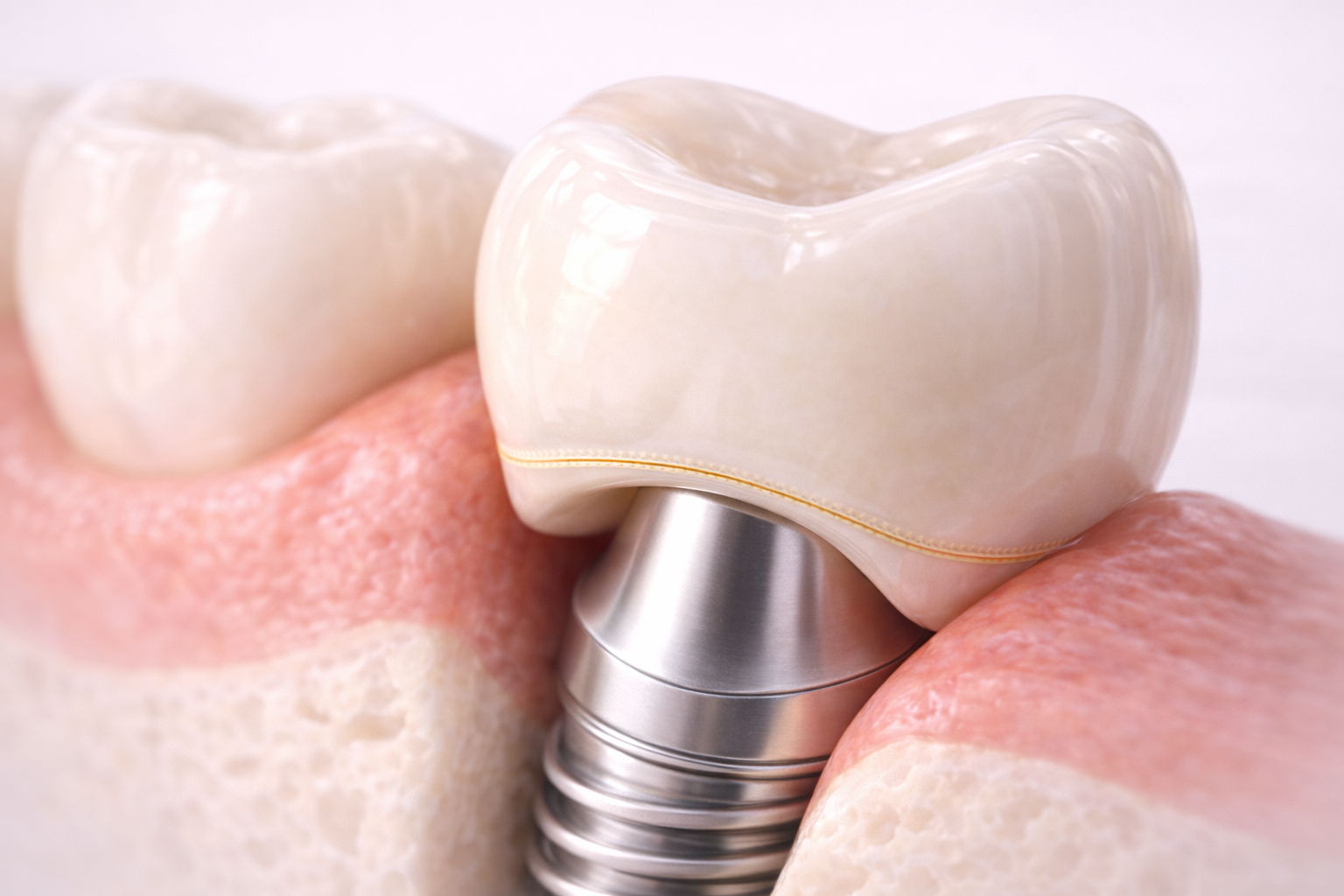
Abutment design directly determines where the crown margin will sit relative to the gingiva. Custom abutments allow clinicians to control margin height more precisely compared to stock components.
With a well-designed custom abutment, margins can be positioned slightly above or just at the gingival margin, which improves visibility and cement removal during crown placement.
This concept is closely related to the difference between stock and custom components. For a deeper explanation see Stock vs Custom Abutments.
Margin Depth and Cement Control
One of the most common complications in implant prosthetics is excess cement left around the implant restoration. When margins are placed too deep below the gum line, it becomes extremely difficult to remove all cement during crown delivery.
Residual cement is one of the leading causes of peri-implant inflammation.
For this reason, many clinicians prefer margin placement that allows full visualization during cement removal. Another strategy is choosing a different retention method entirely.
You can learn more about retention options in Screw-Retained vs Cement-Retained Implant Restorations.
Soft Tissue Considerations
Soft tissue thickness plays a major role in margin placement decisions. In patients with thicker gingival biotypes, margins can sometimes be positioned slightly deeper without compromising tissue health.
However, in thin tissue cases, deep margins may cause tissue irritation or make cement removal almost impossible.
Proper soft tissue support also depends on the emergence profile of the restoration. For a deeper explanation of how restoration shape influences tissue stability, see Implant Emergence Profile.
Margin Placement in the Esthetic Zone
In the anterior region, margin placement must balance two competing goals:
- aesthetic crown emergence
- clinical accessibility
Margins that are too shallow may compromise the aesthetic transition between crown and soft tissue. Margins that are too deep may compromise maintenance.
The final margin position should be planned together with the laboratory during the restorative design stage.
Digital workflows now allow clinicians and labs to evaluate margin placement more accurately during planning. Learn more in Digital Workflow for Implant Abutments.
Clinical Guidelines for Margin Placement
While each case is unique, several general principles can help guide margin placement in implant restorations.
- Margins should be placed where cement removal remains possible
- Deep margins increase risk of peri-implant complications
- Custom abutments improve margin control
- Margin placement must consider soft tissue thickness
- Prosthetic planning should involve both clinician and laboratory
Proper communication between the clinic and the dental laboratory is essential for achieving predictable results.
Conclusion
Abutment margin placement plays a critical role in implant restoration success. The margin location influences cement removal, tissue health, restoration longevity, and maintenance.
Careful planning, collaboration with the dental laboratory, and proper abutment design allow clinicians to control margin placement more precisely and reduce complications.
By understanding how margin position interacts with implant position, abutment design, and tissue behavior, clinicians can create implant restorations that are both functional and maintainable.