Common Implant Restoration Mistakes and How to Avoid Them
Implant dentistry has become one of the most predictable treatment options in modern dentistry. However, even well-placed implants can fail at the prosthetic stage if restorative planning is not performed carefully.
Many implant complications are not caused by surgical errors but by prosthetic design decisions. Problems related to abutment selection, margin placement, emergence profile, and cement control can all affect long-term outcomes.
Understanding the most common restorative mistakes allows clinicians to prevent complications before they occur.
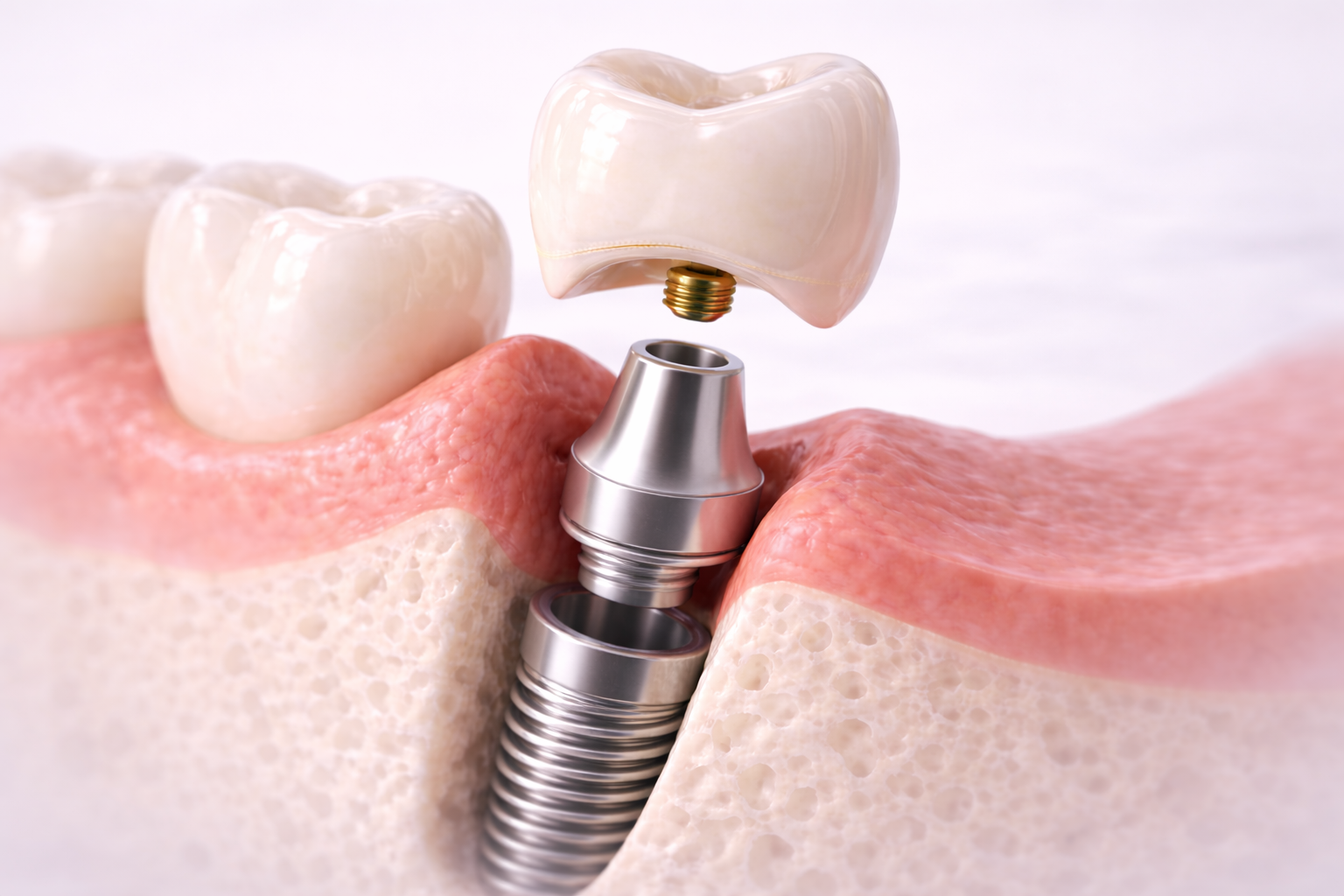
Mistake #1: Ignoring Implant Position During Prosthetic Planning
One of the most frequent issues in implant restorations occurs when prosthetic planning does not fully consider the position of the implant.
If an implant is placed too buccally, too lingually, or with excessive angulation, it can create challenges for crown contour, emergence profile, and abutment design.
In these situations, clinicians often need custom abutments or digital planning to compensate for implant positioning.
You can read more about this topic in How Implant Position Affects Abutment Choice.
Mistake #2: Using Stock Abutments in Complex Cases
Stock abutments can work well in straightforward implant cases. However, they may limit restorative flexibility when implants are placed in challenging positions.
Custom abutments allow clinicians to control crown contour, margin placement, and emergence profile more precisely.
Choosing the right abutment type is an important step in achieving predictable implant restorations.
For a detailed comparison see Stock vs Custom Abutments.
Mistake #3: Poor Emergence Profile Design
The emergence profile defines how the crown transitions from the implant platform through the soft tissue into the visible tooth.
If the emergence profile is too bulky or poorly shaped, it may lead to tissue irritation, plaque accumulation, or aesthetic problems.
Well-designed emergence profiles support healthy soft tissue architecture and allow easier cleaning.
You can explore this concept further in Implant Emergence Profile.
Mistake #4: Incorrect Crown Margin Placement
Margin placement is another common source of complications in implant restorations.
Margins that are positioned too deep below the gingiva may trap cement and make removal extremely difficult.
Residual cement is one of the most common causes of peri-implant inflammation.
For a detailed explanation of this topic see Abutment Margin Placement in Implant Restorations.
Mistake #5: Choosing the Wrong Retention Method
Another frequent problem occurs when the retention method does not match the clinical situation.
Cement-retained crowns can provide excellent aesthetics, but they increase the risk of cement retention if margins are not accessible.
Screw-retained restorations eliminate cement but may introduce other design considerations.
To understand when each option is appropriate, read Screw-Retained vs Cement-Retained Restorations.
Mistake #6: Poor Communication with the Dental Laboratory
Successful implant restorations require close collaboration between the clinician and the dental laboratory.
Insufficient information about implant position, tissue thickness, or restorative goals can lead to incorrect abutment design or crown contour.
Digital workflows are increasingly used to improve communication and reduce errors.
Learn more about this process in Digital Workflow for Implant Abutments.
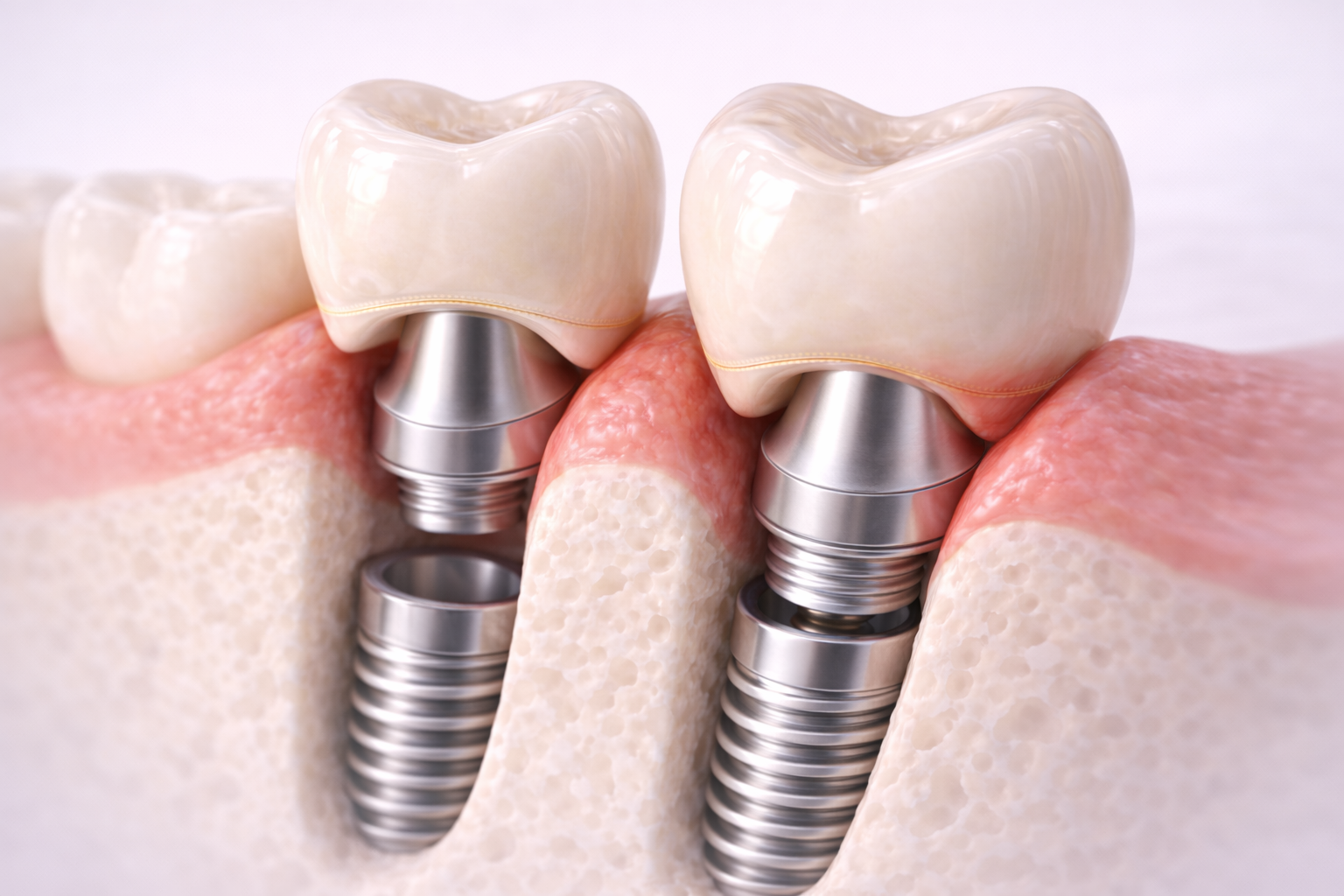
Preventing Implant Restoration Complications
Avoiding implant complications requires careful planning, proper component selection, and collaboration between the clinic and laboratory.
Some practical strategies include:
- planning restorations before surgery whenever possible
- choosing the appropriate abutment design
- controlling margin placement
- ensuring accessible cement removal
- using digital planning tools when needed
When these principles are applied, implant restorations become far more predictable and easier to maintain.
Conclusion
Most implant restoration problems are preventable. By understanding the common mistakes that occur during prosthetic planning, clinicians can significantly improve treatment outcomes.
Careful attention to implant position, abutment selection, crown contour, and margin placement allows dentists to create implant restorations that are both functional and long-lasting.