Custom Abutment Design Principles in Modern Implant Dentistry
Custom abutments play a major role in modern implant prosthetics because they allow the restorative team to design the implant restoration around the patient rather than forcing the patient to adapt to a generic component.
In straightforward cases, stock abutments may be sufficient. But when esthetics, tissue support, implant position, and restorative precision become more important, custom abutments often provide a significantly better solution.
A well-designed custom abutment can improve crown contour, emergence profile, soft tissue management, margin accessibility, and long-term maintainability. For this reason, understanding the design principles behind custom abutments is essential for clinicians who want more predictable implant restorative outcomes.
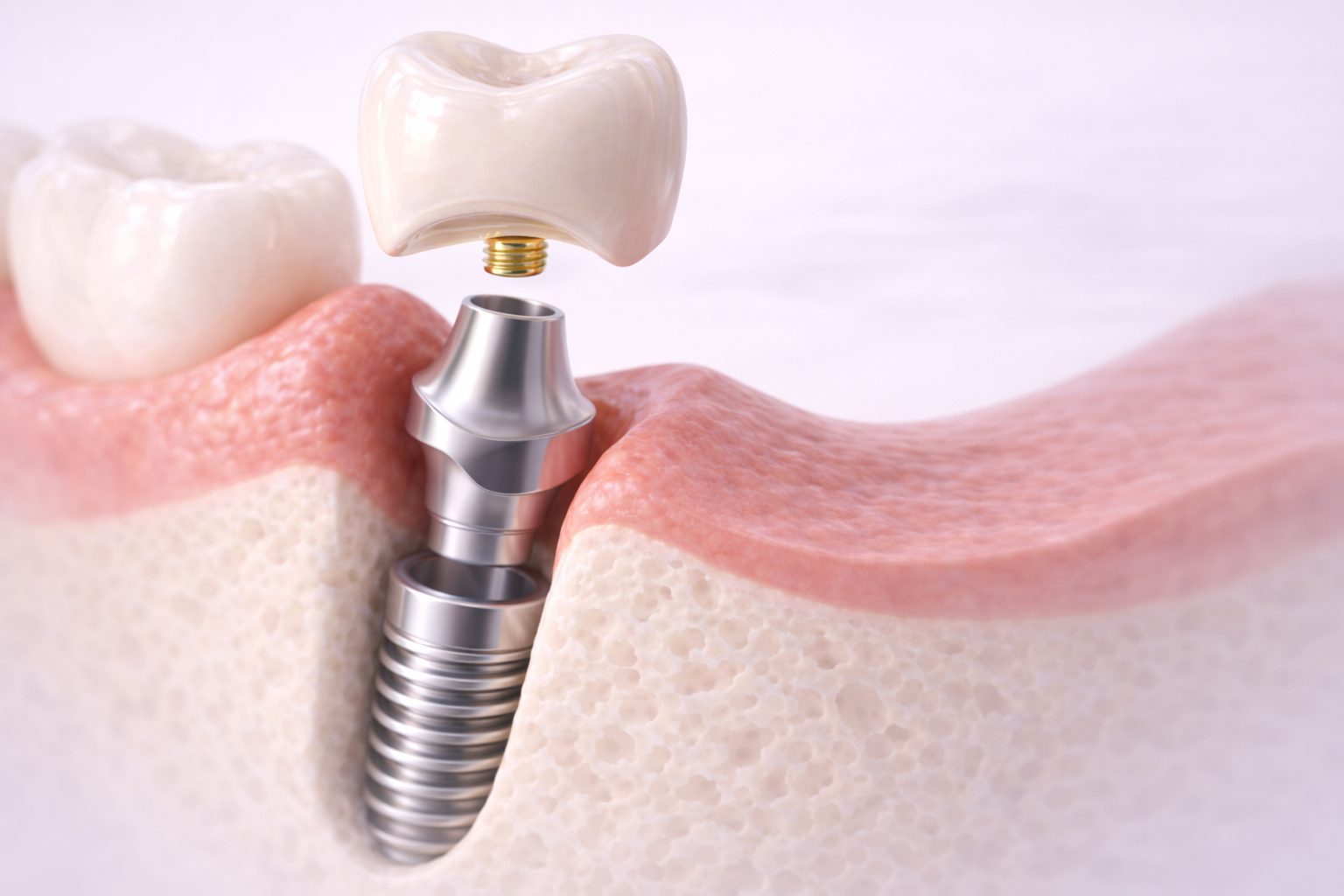
Why Custom Abutment Design Matters
A custom abutment is not simply a more expensive version of a stock component. Its purpose is different.
A stock abutment provides a standard geometry. A custom abutment provides a case-specific geometry designed around the final restoration.
This difference affects:
- emergence profile
- crown contour
- margin placement
- tissue support
- esthetics
- hygiene access
- restorative fit
For a broader comparison between stock and custom components, see Stock vs Custom Abutments.
Principle 1: Design the Abutment Around the Final Crown
One of the most important principles in custom abutment design is crown-driven planning.
The abutment should not be treated as an isolated component. It should be designed around the final crown shape, the soft tissue architecture, and the desired restorative outcome.
When clinicians and labs begin with the final crown in mind, the abutment can be shaped to support:
- a more natural emergence profile
- improved cervical contour
- better tissue support
- more ideal margin location
This is one of the key advantages of digital workflows in implant prosthetics.
To explore this more deeply, see Digital Workflow for Implant Abutments.
Principle 2: Control the Emergence Profile
The emergence profile is one of the most important reasons to choose a custom abutment.
A generic abutment may force the final crown to compensate for missing contour. This often results in a restoration that looks bulky or unnatural.
A custom abutment allows the restorative team to control how the crown emerges through the gingiva and how the cervical anatomy develops.
This becomes especially important in the esthetic zone and in cases with thin tissue biotypes.
For more on this topic, see Implant Emergence Profile.
Principle 3: Improve Soft Tissue Support
A strong custom abutment design should support soft tissue in a natural and maintainable way.
The goal is not to create excessive pressure against the gingiva. The goal is to create a restorative shape that supports the tissue contour without producing bulky or plaque-retentive areas.
When soft tissue support is handled properly, the restoration often appears more natural and becomes easier for the patient to clean.
This principle is closely connected to the shape of the final crown. To read more, see Implant Crown Contour and Soft Tissue Support.
Principle 4: Place Margins Where They Can Be Managed
Margin control is another key design principle.
If the margin is too deep, cement removal becomes difficult and biologic risk increases. If the margin is too shallow, esthetic compromise may occur.
Custom abutments allow clinicians to position margins more strategically than stock abutments. This is especially helpful in cement-retained implant restorations.
For more on this topic, see Abutment Margin Placement in Implant Restorations.
Principle 5: Respond to Implant Position
Custom abutments are often most valuable when implant position is less than ideal.
If the implant is too facial, too deep, or slightly angled, the abutment can help compensate restoratively by improving crown path, contour, and margin design.
This does not mean custom abutments can solve every surgical limitation. But they often allow the restorative team to recover more control than a stock abutment would.
To explore the impact of implant position, see How Implant Position Affects Abutment Choice.
Principle 6: Match Material to the Case
Custom abutments can be produced in different materials depending on the clinical needs of the case.
Titanium is often selected when strength and structural reliability are the priority. Zirconia may be preferred in esthetic cases where cervical color and tissue appearance matter more.
The design process should always consider not only the shape of the abutment but also the material that best supports the functional and esthetic goals of the restoration.
For a deeper comparison, see Titanium vs Zirconia Abutments.
Principle 7: Consider Retention Strategy During Design
Custom abutment design should always be coordinated with the final retention method.
If the restoration will be cement-retained, the margin position and abutment contour become especially important.
If the restoration will be screw-retained, access path, angulation, and restorative geometry may influence how the custom component is designed.
This is why retention planning and abutment design should never be treated as separate steps.
To understand these differences, see Screw-Retained vs Cement-Retained Restorations.
Principle 8: Use the Healing Phase to Support the Final Design
In many cases, the final custom abutment design works better when the soft tissue has already been shaped correctly during healing.
Custom healing abutments and well-designed provisional restorations can create more favorable tissue architecture before the final abutment is delivered.
This often reduces the need for restorative compensation later.
For more on tissue shaping during healing, see Custom Healing Abutments.
Common Custom Abutment Design Mistakes
Some common errors reduce the value of custom abutments even when the component is technically custom-made.
These include:
- designing without considering the final crown
- placing margins too deep
- ignoring tissue thickness
- overbuilding cervical contour
- choosing material without regard to case type
- failing to coordinate with retention strategy
- not using digital planning effectively
A custom abutment is only as good as the design logic behind it.
Conclusion
Custom abutments are one of the most valuable tools in modern implant prosthetics because they allow restorative planning to become more precise, more anatomical, and more patient-specific.
When designed well, they improve emergence profile, crown contour, tissue support, margin control, and overall restorative predictability.
The strongest results come when custom abutment design is integrated into the full implant workflow — from implant position and tissue management to crown design and final delivery.
Frequently Asked Questions
What is a custom abutment in implant dentistry?
A custom abutment is a patient-specific connector that links a dental implant to its final crown or prosthesis, designed and fabricated to match the individual case rather than a standard shape. Unlike stock abutments, a custom abutment is shaped to the patient’s specific emergence profile, gingival contours, and angulation needs. This produces better soft-tissue support, esthetics, and a more precise fit for the restoration. BioDent, a B2B dental laboratory in Matawan, NJ, designs and mills custom abutments for dental practices throughout New Jersey and New York.
What is the difference between a custom abutment and a stock abutment?
A stock abutment is a prefabricated, standardized component that the clinician may modify chairside, while a custom abutment is designed digitally and milled specifically for the patient’s anatomy. Custom abutments provide superior emergence profile control, better angulation correction, and a more natural tissue contour, especially in the esthetic zone. Stock abutments can be faster and less expensive for straightforward posterior cases with ideal implant positioning. The choice depends on implant angulation, esthetic demands, and soft-tissue requirements.
What is emergence profile in custom abutment design?
Emergence profile refers to the contour of the abutment as it transitions from the round implant platform to the shape of the natural tooth at the gumline. A well-designed emergence profile supports the surrounding gingiva, prevents food trapping, and creates a natural-looking restoration. Poor emergence contours can cause tissue inflammation, recession, or an unesthetic appearance. Custom abutment design allows precise control of this transition, which is a primary reason custom abutments are preferred in the esthetic zone.
Should a custom abutment be titanium or zirconia?
Titanium abutments offer maximum strength and are preferred for posterior and high-load cases, while zirconia abutments provide superior esthetics for anterior restorations where the abutment color could show through thin tissue. Titanium is durable and biocompatible but can create a gray hue beneath thin gingiva. Zirconia is tooth-colored and ideal for the esthetic zone, though it is less suited to severe angulation correction or very high bite forces. Hybrid abutments, which bond a zirconia component to a titanium base, combine the esthetics of zirconia with the strength of a titanium connection.
How does a custom abutment correct implant angulation?
A custom abutment corrects implant angulation by redirecting the path of the final restoration away from the implant’s actual axis, allowing the crown to emerge in the proper position and direction. This is essential when an implant is placed at an angle that would otherwise produce a poorly positioned crown or a screw access hole in an esthetic or functional area. Custom design can reposition the screw channel and reshape the abutment to achieve an ideal restorative outcome. Angulation correction is one of the main clinical reasons dentists choose custom over stock abutments.
What is the digital workflow for custom abutment fabrication?
The digital workflow for custom abutments begins with an intraoral or model scan that captures the implant position using a scan body, followed by CAD design of the abutment to the patient’s specific contours. The design is then milled from titanium or zirconia and finished for delivery to the dental practice. This digital process improves precision, repeatability, and fit compared with conventional analog techniques. BioDent uses a CAD/CAM digital workflow to design and mill custom abutments for dental practices in New Jersey and New York.