Implant Abutments in the Esthetic Zone
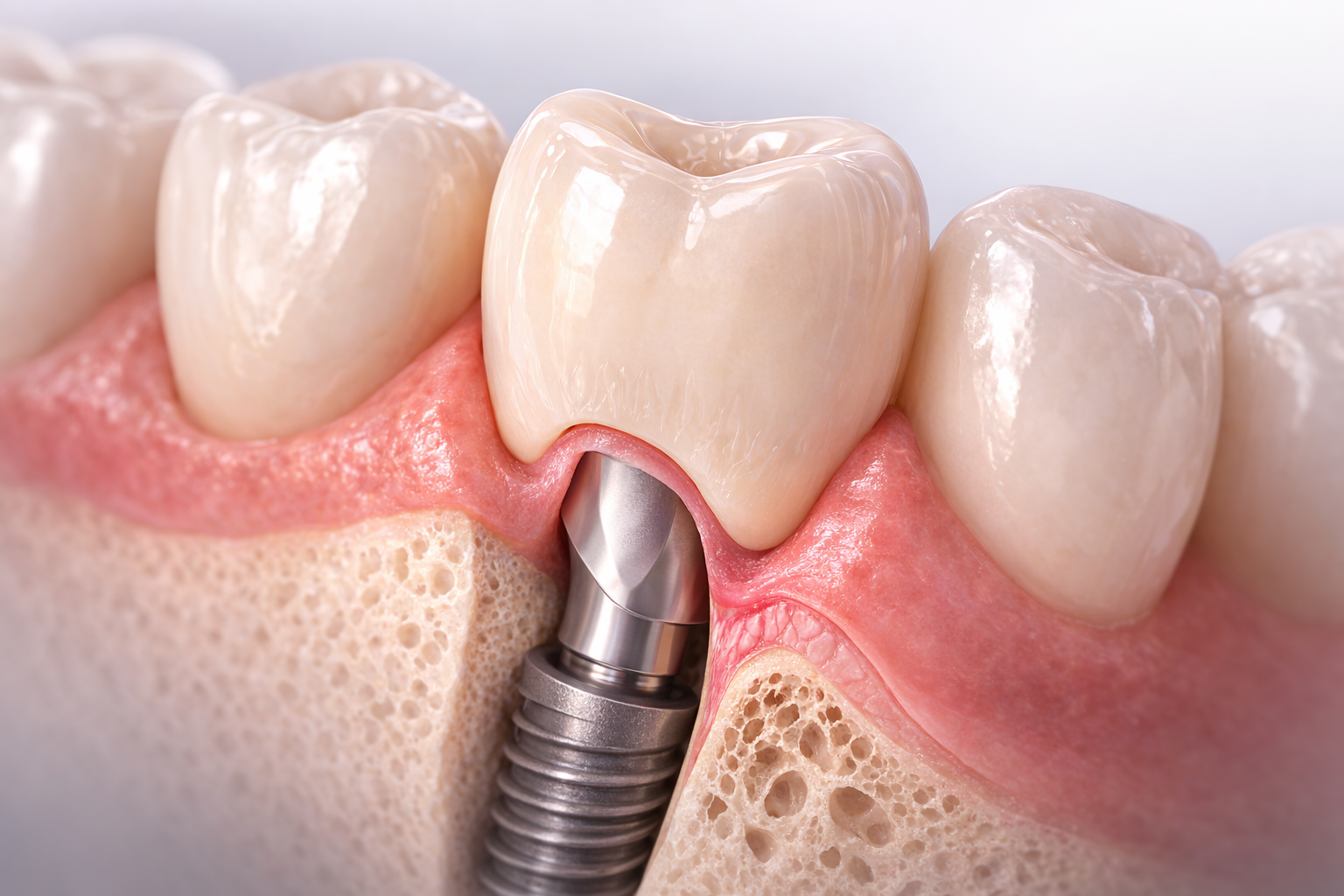
Restoring implants in the esthetic zone is significantly more demanding than restoring posterior implants. The anterior region requires careful control of soft tissue contours, crown emergence, and material selection in order to achieve a natural appearance.
Even small restorative errors can become visible in the smile zone. For this reason, clinicians must consider several factors when planning implant restorations in anterior areas, including abutment design, tissue thickness, and implant position.
Proper abutment selection is often the key factor that determines whether the final restoration blends naturally with adjacent teeth.
Why the Esthetic Zone Is More Challenging
The esthetic zone typically refers to the anterior teeth that are visible when a patient smiles. These restorations must meet both functional and aesthetic requirements.
Challenges in this region include:
- thin gingival biotype
- visible soft tissue contours
- crown translucency
- cervical color of the restoration
- symmetry with adjacent teeth
Because of these factors, prosthetic design must be extremely precise.
Implant position plays a particularly important role in esthetic cases. When implants are placed slightly outside the ideal prosthetic position, restorative compensation becomes necessary.
To understand how implant position affects restorative planning, see How Implant Position Affects Abutment Choice.
Choosing Between Titanium and Zirconia Abutments
Material selection becomes especially important in the esthetic zone.
Titanium abutments provide excellent strength and durability, but their metallic color may sometimes influence the appearance of thin gingival tissues.
Zirconia abutments are often used in highly esthetic cases because their tooth-colored structure can improve the visual integration between the crown and surrounding soft tissue.
Each material has advantages depending on tissue thickness and aesthetic demands.
For a detailed comparison, read Titanium vs Zirconia Abutments.
Emergence Profile and Soft Tissue Architecture
The emergence profile determines how the restoration transitions from the implant platform through the soft tissue and into the visible crown.
In the esthetic zone, this transition must closely resemble the natural anatomy of adjacent teeth.
If the emergence profile is too abrupt or too bulky, the restoration may look artificial and may create plaque-retentive areas.
A properly designed emergence profile allows the soft tissue to form a stable and natural contour.
To explore this concept further, see Implant Emergence Profile.
The Role of Custom Abutments in Esthetic Cases
Custom abutments are frequently used in the esthetic zone because they allow greater control over crown contour and margin placement.
By designing the abutment specifically for the patient’s anatomy, clinicians and laboratories can shape the restoration to support the gingiva and improve crown emergence.
Custom abutments are particularly useful when implant angulation or depth requires restorative compensation.
For a deeper explanation of custom abutment design, see Custom Abutment Design Principles in Modern Implant Dentistry.
Margin Placement and Tissue Health
Margin location must also be carefully considered in esthetic implant restorations.
Margins that are too shallow may compromise aesthetics, while margins that are too deep can make cement removal difficult.
Custom abutments often allow clinicians to position the margin where it balances both aesthetic and clinical considerations.
For more on margin placement, see Abutment Margin Placement in Implant Restorations.
Digital Planning in Esthetic Implant Cases
Digital workflows have significantly improved the predictability of implant restorations in the esthetic zone.
Digital planning tools allow clinicians and laboratories to visualize:
- final crown design
- soft tissue contours
- abutment geometry
- implant angulation
This collaborative planning approach reduces restorative errors and improves communication between the clinic and the laboratory.
To learn more about this process, see Digital Workflow for Implant Abutments.
Achieving Natural Esthetic Results
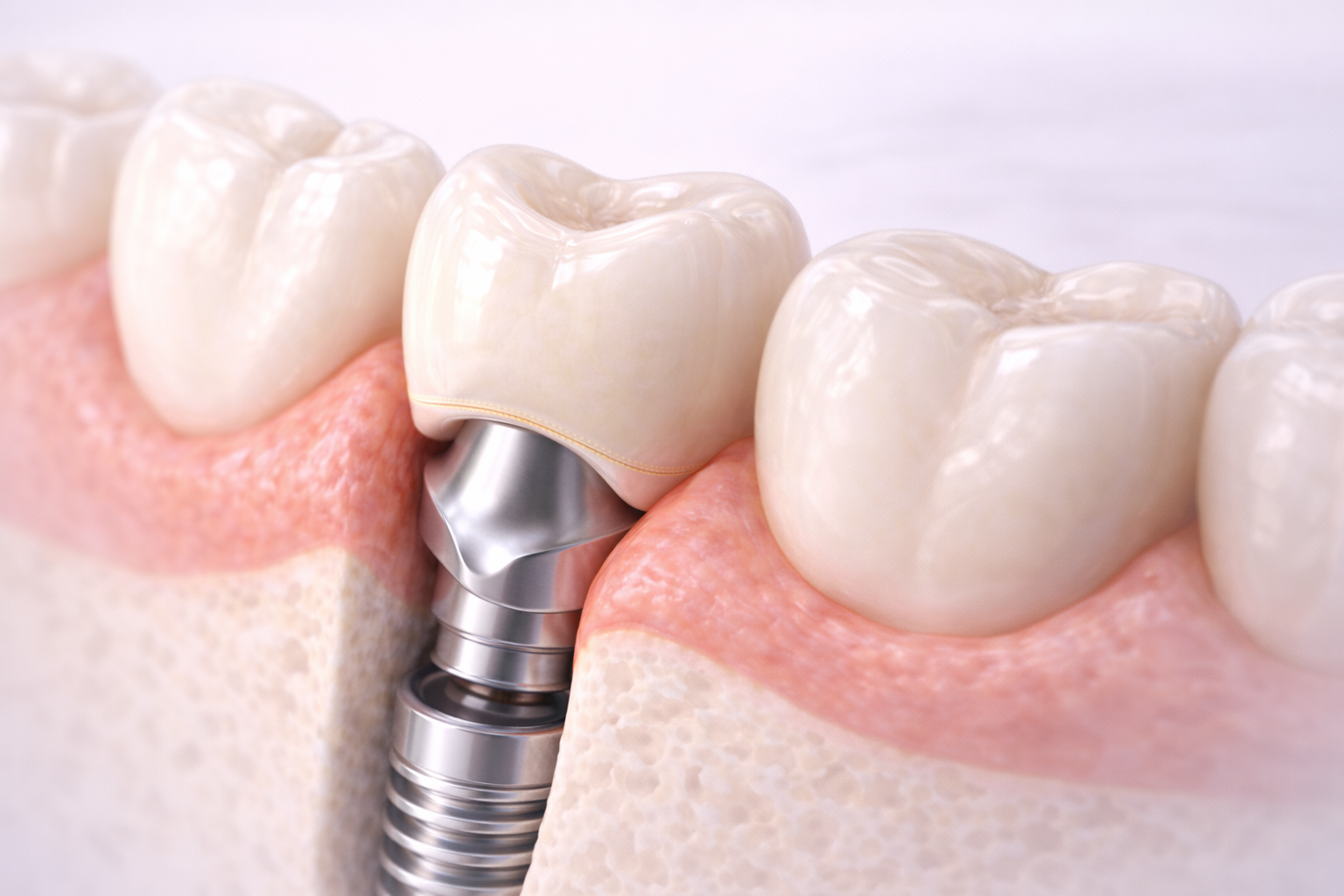
Successful implant restorations in the esthetic zone require coordination between surgical placement, restorative planning, and laboratory design.
Clinicians must consider:
- implant position
- abutment design
- tissue thickness
- crown contour
- material selection
When these elements are properly coordinated, implant restorations can achieve highly natural and predictable aesthetic outcomes.
Conclusion
Implant restorations in the esthetic zone require a higher level of restorative planning than posterior cases.
Proper abutment selection, emergence profile control, and soft tissue support all play important roles in achieving natural-looking results.
By combining careful surgical placement with thoughtful prosthetic design, clinicians can produce implant restorations that integrate seamlessly with the surrounding dentition.