Implant Abutments for Posterior Restorations
Posterior implant restorations may seem simpler than anterior cases because esthetics are less dominant. However, posterior implants present their own restorative challenges, especially in relation to strength, occlusal load, crown contour, hygiene access, and long-term maintenance.
In many posterior cases, the key question is not how to make the restoration look invisible in the smile line. The key question is how to build a restoration that functions predictably under load, supports healthy tissue, and remains maintainable over time.
This is where abutment selection becomes especially important. The right abutment can improve crown support, emergence profile, margin placement, and restorative durability. The wrong abutment can create unnecessary bulk, poor load distribution, or hygiene problems in areas that are already harder for patients to clean.
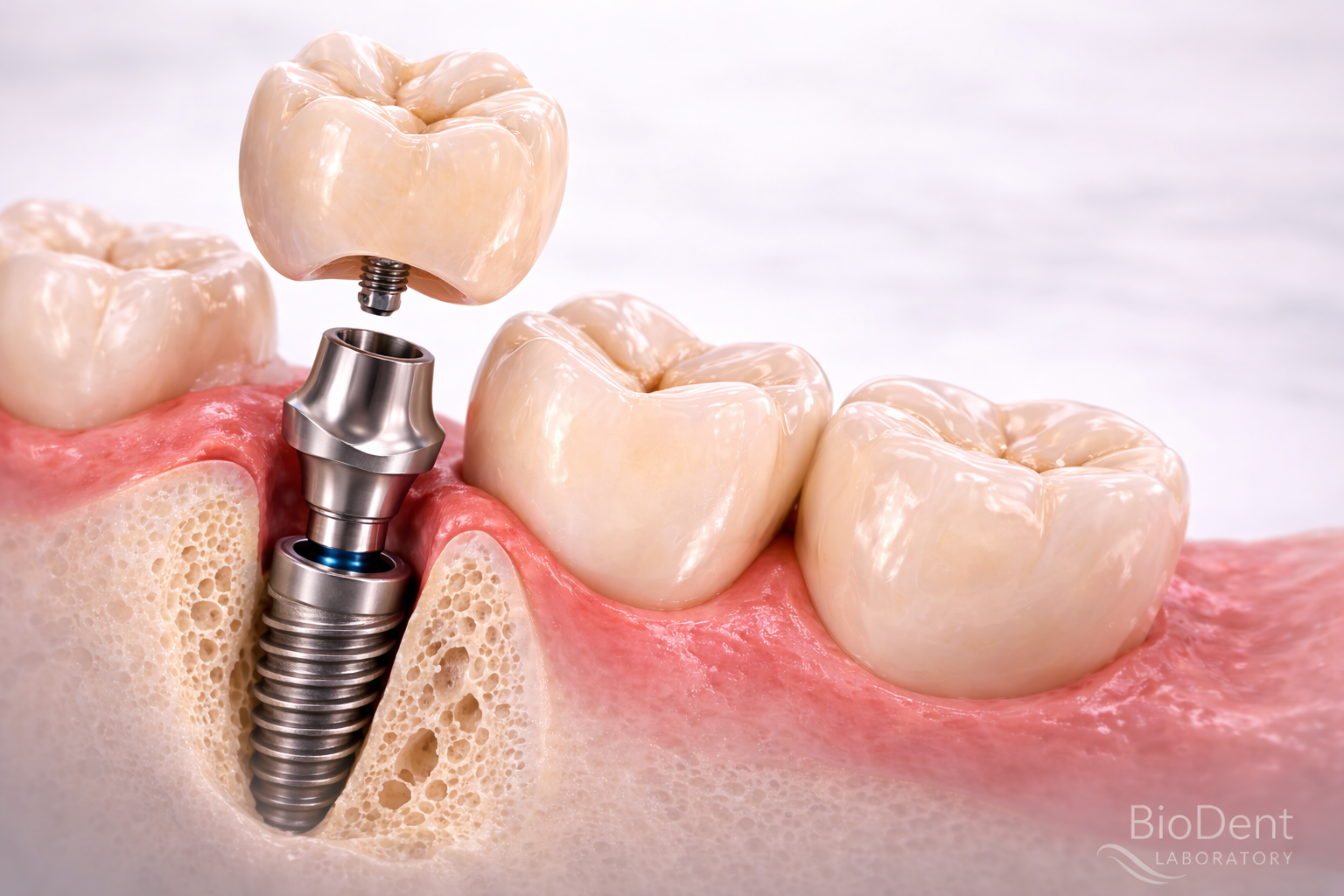
Why Posterior Implant Restorations Are Different
Posterior restorations operate under heavier functional demands than anterior restorations. Molars and premolars are exposed to higher chewing forces, broader occlusal contact, and greater long-term mechanical stress.
Because of this, posterior implant planning usually gives more weight to:
- structural strength
- occlusal management
- restorative space
- material durability
- maintenance access
- long-term function under load
While esthetics still matter, the balance shifts more heavily toward strength and serviceability.
This is one reason posterior implant restorations often have different restorative priorities than esthetic-zone cases. For more on the contrast between visible and non-visible zones, see Implant Abutments in the Esthetic Zone.
Abutment Selection in Posterior Cases
In posterior implants, abutment selection is often guided by function first. The restorative team needs to decide whether the case is simple enough for a stock solution or whether it requires a custom abutment for better control.
Stock abutments may be perfectly reasonable when:
- implant position is favorable
- restorative space is adequate
- tissue conditions are simple
- crown contour is straightforward
- hygiene access remains acceptable
Custom abutments become more useful when:
- implant angulation is less than ideal
- crown contour needs more control
- margins must be positioned strategically
- restorative space is limited
- posterior tissue support still matters
For a broader comparison, see Stock vs Custom Abutments.
Strength and Material Choice
Material selection is especially important in posterior implant restorations because these cases often experience the highest load.
Titanium is frequently preferred in posterior regions because of its strength, durability, and reliability under function. Zirconia may still be used in selected cases, but posterior restorations usually place a stronger emphasis on mechanical confidence than on cervical color.
When deciding on abutment materials, clinicians should evaluate:
- occlusal load
- parafunctional habits
- implant position
- available restorative space
- long-term maintenance expectations
For a deeper material comparison, see Titanium vs Zirconia Abutments.
Implant Position Still Matters in Posterior Cases
Even though posterior cases are often more forgiving esthetically, implant position still strongly affects restorative design.
A posterior implant that is too angled, too deep, or positioned too facially or lingually may still create:
- bulkier crown form
- more difficult screw access
- less ideal margin placement
- compromised hygiene access
- occlusal imbalance
This is why posterior implant restorations should not be treated as “easy by default.” Restorative precision still matters.
For more on this, see How Implant Position Affects Abutment Choice.
Crown Contour and Hygiene in Posterior Areas
Posterior crowns must be strong, but they also need to remain cleanable.
One of the biggest restorative mistakes in posterior implant dentistry is creating a crown that is functionally durable but too bulky cervically. That can make hygiene difficult and encourage plaque accumulation.
Posterior implant crown contour should support tissue naturally while allowing the patient to clean around the restoration effectively.
For more on restorative form, see Implant Crown Contour and Soft Tissue Support.
Margin Placement in Posterior Restorations
Margin placement remains an important issue even when the restoration is not in the esthetic zone.
Margins that are too deep can still trap cement and create inflammatory risk. Margins that are difficult to access in posterior zones may be even harder to clean than in anterior cases because visibility is reduced and patient hygiene is more limited.
This is why posterior cases still benefit from careful margin planning, especially in cement-retained restorations.
For more on this, see Abutment Margin Placement in Implant Restorations.
Screw-Retained vs Cement-Retained in Posterior Cases
Posterior implants are often good candidates for screw-retained restorations because the access hole is usually less problematic esthetically than in the smile zone.
This can make screw retention very practical in posterior dentistry, especially when retrievability and maintenance are priorities.
Cement-retained restorations may still be appropriate in selected posterior cases, but the decision should be based on implant angle, margin access, and restorative strategy.
For a deeper explanation, see Screw-Retained vs Cement-Retained Restorations.
Occlusion and Load Distribution
Posterior implant restorations require careful occlusal management because implants do not have the same shock-absorbing characteristics as natural teeth.
Even a well-made abutment may fail functionally if occlusal planning is poor.
Clinicians should consider:
- cusp anatomy
- occlusal table width
- contact intensity
- excursive forces
- parafunctional loading
The restorative design should reduce overload while still preserving function.
Digital Workflow in Posterior Implant Cases
Digital workflow can improve posterior restorative planning by making it easier to evaluate crown form, occlusal space, abutment design, and margin location before the restoration is fabricated.
This is particularly useful in posterior cases because many of the functional issues can be anticipated digitally before delivery.
For more on this process, see Digital Workflow for Implant Abutments.
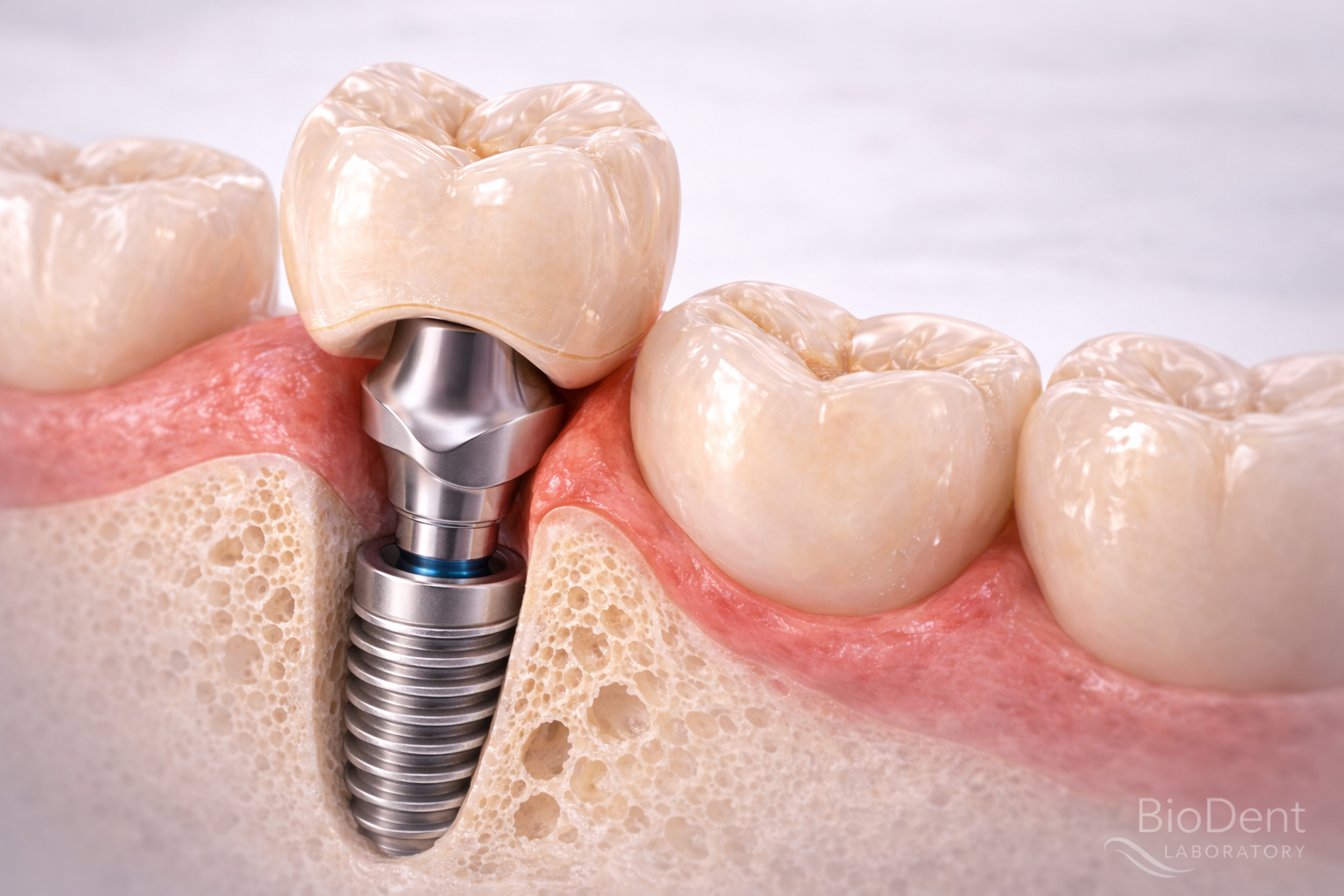
Common Posterior Implant Abutment Mistakes
Some common errors in posterior cases include:
- choosing strength without considering hygiene
- using stock abutments in position-sensitive cases
- creating excessive cervical bulk
- underestimating margin accessibility
- ignoring occlusal load distribution
- choosing retention method without considering serviceability
These mistakes may not always be visible immediately, but they often affect long-term maintenance and restoration success.
To explore related restorative problems, see Common Implant Restoration Mistakes and How to Avoid Them.
Conclusion
Posterior implant restorations may be less esthetically demanding than anterior cases, but they are often more demanding functionally.
The right abutment for a posterior implant case should support load management, cleanable contour, proper margin placement, and long-term maintenance. Material, implant position, retention strategy, and digital planning all influence the final choice.
When clinicians approach posterior implant restorations with the same level of restorative planning used in more visible cases, outcomes become more predictable and more durable.