Digital Communication Between Clinic and Dental Lab
Modern implant dentistry depends not only on clinical skill and laboratory quality, but also on the quality of communication between the clinic and the dental lab. As workflows become more digital, communication becomes faster, more precise, and far more influential on the final restorative result.
A highly skilled laboratory cannot fully compensate for incomplete case information. In the same way, a well-planned clinical case may still become compromised if the lab does not receive the right digital data, restorative goals, and design guidance.
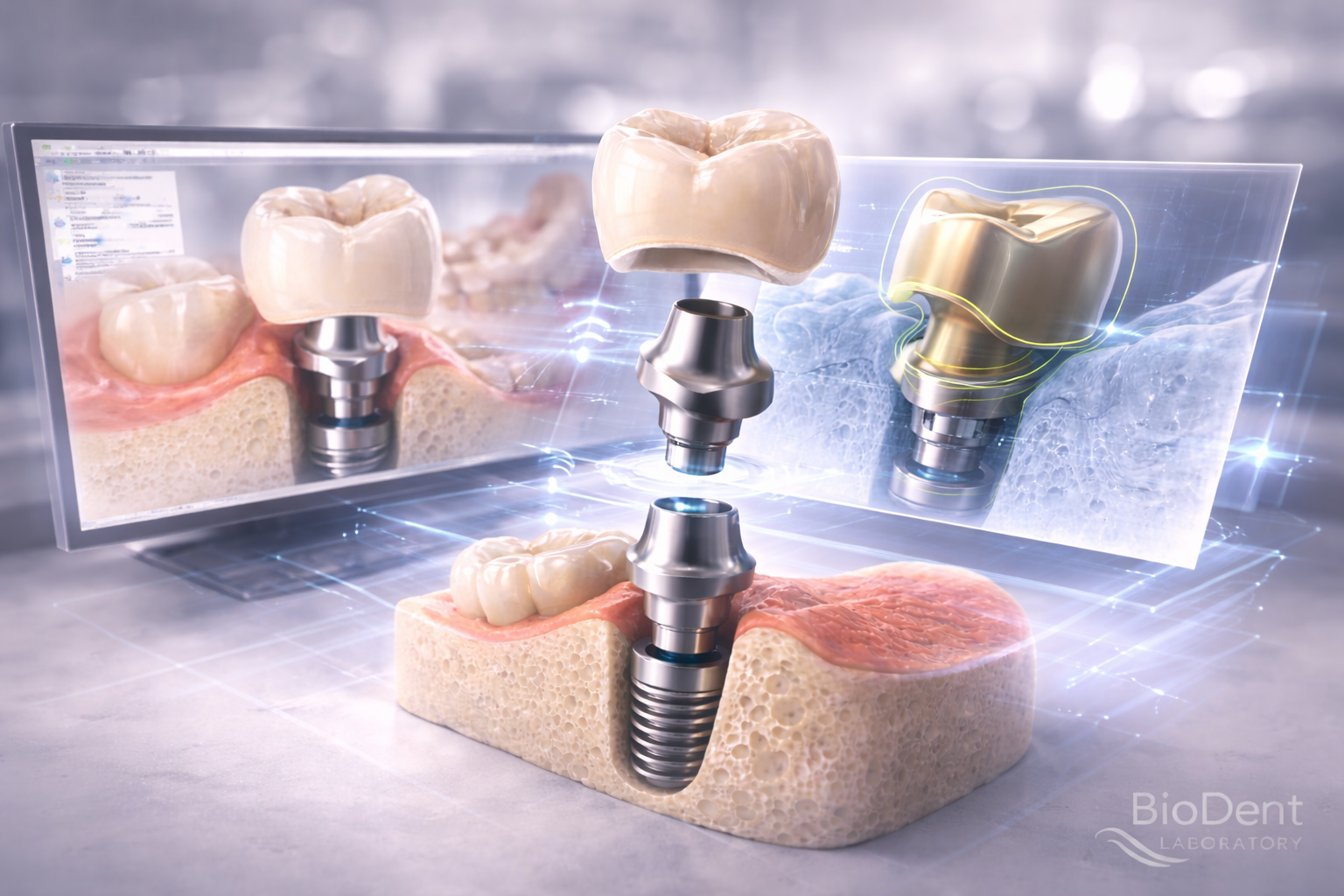
Why Communication Matters So Much in Implant Cases
Implant restorations are highly sensitive to detail. Small differences in scan quality, implant orientation, tissue contour, and restorative planning can influence:
- abutment design
- crown contour
- emergence profile
- margin location
- retention method
- fit and seating
- hygiene access
- long-term maintenance
Because so many decisions depend on accurate information, communication between clinic and lab should be treated as a clinical requirement, not an administrative step.
Digital Workflow Has Changed the Communication Standard
In traditional workflows, many important details were communicated through impressions, handwritten notes, and occasional photographs. Today, digital implant workflows allow much more precise case transfer.
That includes:
- intraoral scans
- scan body registration
- digital implant libraries
- shade photos
- occlusal records
- annotated screenshots
- written restorative instructions
- crown design references
This has raised the communication standard. The lab is no longer only receiving a case. It is receiving a digital restorative plan.
For more on the technical side of this process, see Digital Workflow for Implant Abutments.
What Information the Lab Actually Needs
For implant restorative cases, the lab should ideally receive more than just a scan file.
A stronger digital case handoff usually includes:
- a clean intraoral scan
- correct scan body capture
- implant system details
- shade information when relevant
- photos of soft tissue and adjacent dentition
- restorative priority notes
- retention preference
- occlusal information
- notes about esthetic or functional concerns
Without these details, the lab may be forced to make assumptions. That usually increases restorative variability.
Implant Position Must Be Communicated Clearly
One of the most important things the lab needs to understand is how implant position affects the intended restoration.
If the implant is slightly facial, too deep, or mildly angled, the lab must know whether the clinical priority is:
- better crown contour
- tissue support
- margin accessibility
- screw access control
- esthetics
- hygiene access
For more on how implant position changes restorative decisions, see How Implant Position Affects Abutment Choice.
Communication Directly Affects Custom Abutment Design
Custom abutments depend heavily on communication quality. Even an advanced digital design workflow cannot fully succeed if the design objectives are unclear.
If the clinic wants:
- better emergence profile
- more coronal margin placement
- less cervical bulk
- stronger tissue support
- material-specific planning
those goals need to be communicated directly.
For more on design logic, see Custom Abutment Design Principles in Modern Implant Dentistry.
Crown-Driven Instructions Lead to Better Results
A common communication problem is sending implant data without explaining the final restorative goal.
The lab should not have to guess what the final crown is meant to achieve. Stronger cases happen when the clinic clearly communicates:
- whether the case is function-driven or esthetic-driven
- whether crown contour should remain conservative
- whether tissue shaping is a priority
- whether screw retention is preferred
- whether margin accessibility is especially important
This crown-driven approach leads to more useful abutment and crown design.
Soft Tissue Information Is Often Missing
One of the most overlooked parts of clinic-lab communication is soft tissue documentation.
The lab benefits greatly from seeing:
- tissue height
- tissue thickness
- healing pattern
- smile line context
- papilla condition
- contour goals
This is especially important in anterior cases and in cases involving healing contour or provisional tissue development.
For more on this topic, see Soft Tissue Management Around Dental Implants.
Communication Affects Retention Planning Too
Retention choice is also influenced by digital communication.
If the lab understands implant angle, esthetic priorities, and hygiene concerns clearly, it becomes easier to determine whether a case is better suited for:
- screw-retained restoration
- cement-retained restoration
- custom margin control
- alternative restorative geometry
For more on this decision, see Screw-Retained vs Cement-Retained Restorations.
Digital Communication Reduces Remakes and Adjustments
Better communication usually produces better first-time outcomes. That often means:
- fewer chairside adjustments
- better margin behavior
- cleaner emergence profile
- fewer fit surprises
- less need for remake
- stronger clinical confidence
This is one of the biggest practical advantages of strong digital coordination between the clinic and the lab.
Common Communication Mistakes
Some common clinic-lab communication mistakes include:
- sending incomplete scans
- poor scan body capture
- missing implant system information
- no restorative notes
- unclear retention preference
- no photos for esthetic cases
- expecting the lab to infer tissue priorities
- separating crown design from abutment design
These mistakes rarely look dramatic at the time of file transfer, but they often show up later as restorative compromises.
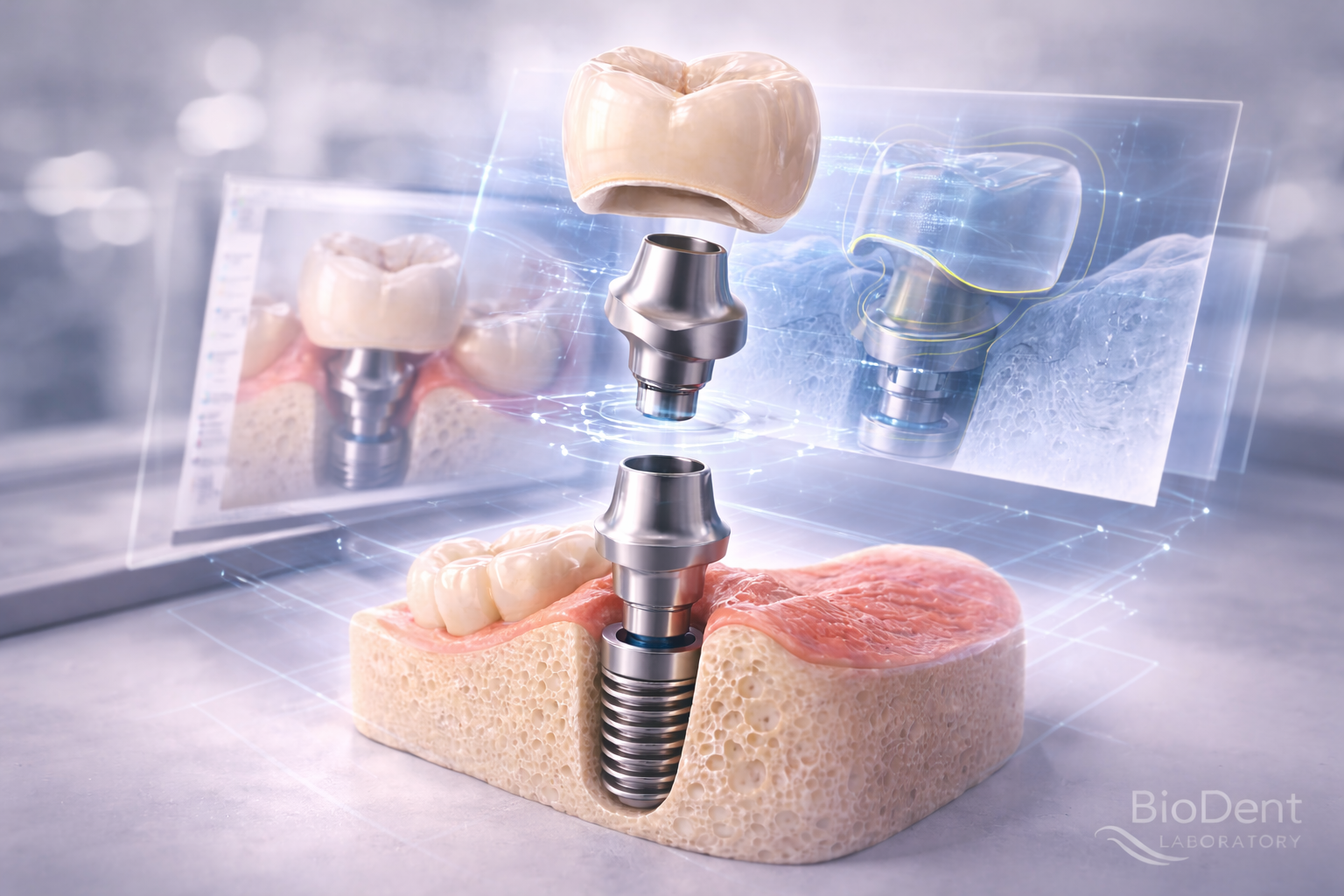
A Practical Communication Standard for Implant Cases
A useful rule is this: if the case matters enough to restore carefully, it matters enough to communicate clearly.
Before sending an implant case to the lab, the clinic should ideally confirm:
- scan is complete and clean
- scan body is fully seated and clearly captured
- implant system is correctly identified
- restorative goal is explained
- tissue photos are included if relevant
- retention preference is stated
- special concerns are documented
This does not make the workflow slower. In most cases, it prevents delays and corrective work later.
Conclusion
Digital communication between clinic and dental lab is one of the most important factors in modern implant restorative success.
The better the case information, the better the lab can design the abutment, crown, margin position, contour, and tissue relationship. Strong communication reduces assumptions, improves predictability, and supports better treatment outcomes.
In implant dentistry, communication is not separate from quality. It is part of quality.
FAQ
Why is digital communication important in implant cases?
Because implant restorations depend on highly accurate data and clear restorative goals. Strong communication helps the lab design more precisely.
What should the clinic send the lab with a digital implant case?
Ideally: a clean scan, correct scan body capture, implant system details, photos, occlusal information, and restorative notes.
Can poor communication affect abutment design?
Yes. If the lab does not understand the clinical priorities, abutment design may be technically correct but restoratively suboptimal.
Why are photos helpful in digital implant communication?
Photos provide information about tissue contour, esthetic context, and restorative priorities that scans alone may not fully communicate.
Does communication affect retention planning?
Yes. Clear communication helps determine whether screw-retained or cement-retained restoration is more appropriate.
Can better communication reduce remakes?
Yes. Better information usually leads to fewer fit problems, fewer design misunderstandings, and fewer chairside adjustments.