Implant Crown Complications: Cement vs Screw Issues
Choosing between cement-retained and screw-retained implant crowns is not only a matter of preference. It directly affects complication rates, maintenance requirements, and long-term biological outcomes.
While both approaches are widely used in implant dentistry, each comes with a distinct set of risks. Some complications appear immediately at delivery, while others develop over time as a result of tissue response, mechanical stress, or hygiene limitations.
Understanding these differences helps clinicians make more informed decisions and reduce the likelihood of avoidable complications.
Why This Comparison Matters in Real Clinical Practice
At first glance, both cement-retained and screw-retained restorations can produce excellent results. However, their long-term behavior often differs.
The choice between them affects:
- biological risk
- ease of maintenance
- retrievability
- complication management
- hygiene accessibility
- restoration longevity
This is why the decision should not be based only on convenience or habit.
For a general comparison, see Screw-Retained vs Cement-Retained Restorations.
Cement-Retained Complications
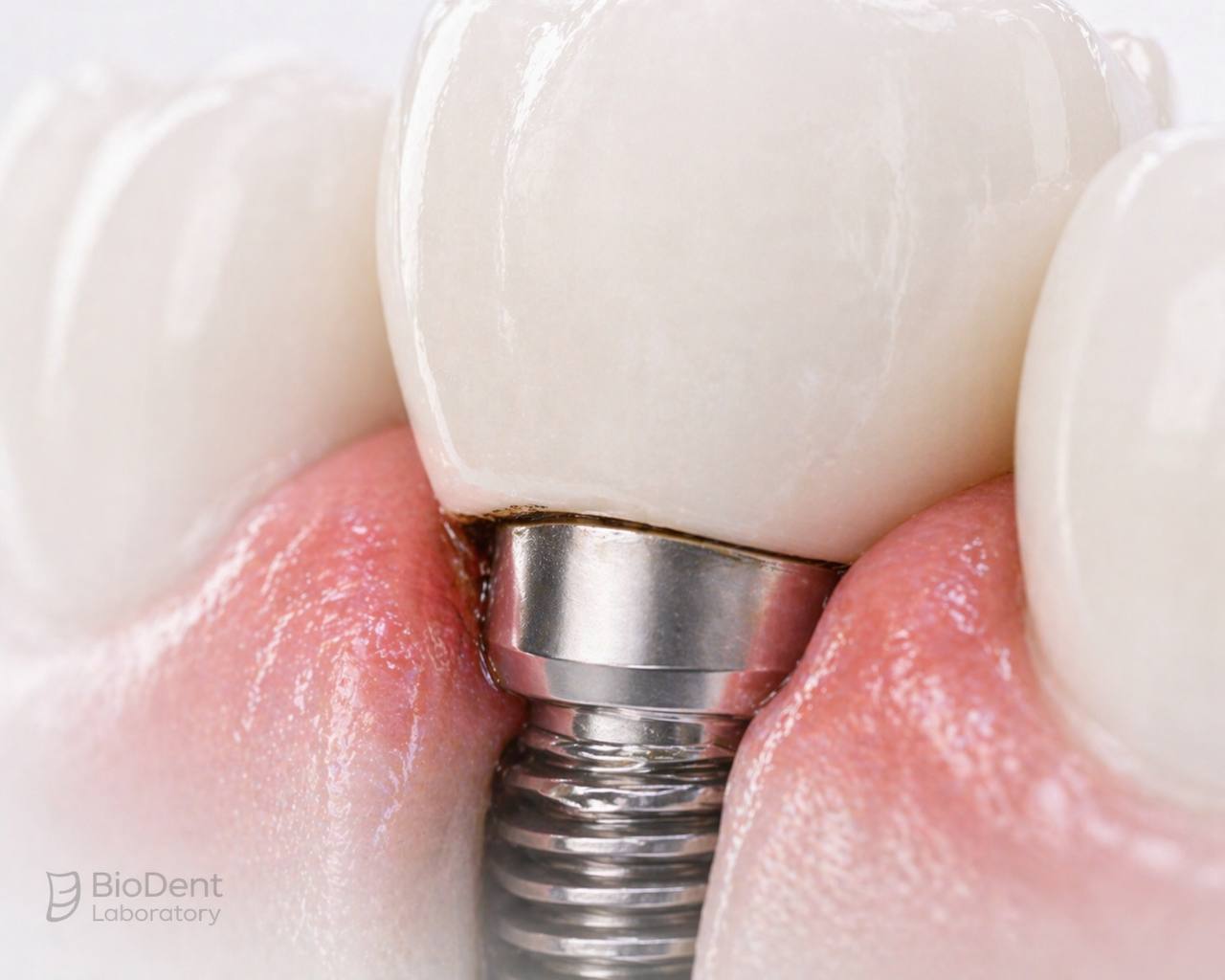
Cement-retained restorations are associated with one of the most well-known implant complications: residual cement.
Even a small amount of cement left around the margin may lead to:
- soft tissue inflammation
- bleeding on probing
- plaque accumulation
- peri-implant mucositis
- peri-implant bone loss
The problem is that cement is often difficult to fully remove, especially when margins are placed subgingivally.
For a deeper explanation, see Cement Removal Around Implant Crowns.
Why Cement Problems Are Often Hidden
One of the most challenging aspects of cement complications is that they are not always immediately visible.
The restoration may appear clinically acceptable at delivery, while cement remains trapped under the tissue.
This risk increases when:
- margins are deep
- tissue is thick
- visibility is limited
- posterior access is difficult
- crown contour is bulky
This makes cement-related complications both common and difficult to detect early.
Screw-Retained Complications
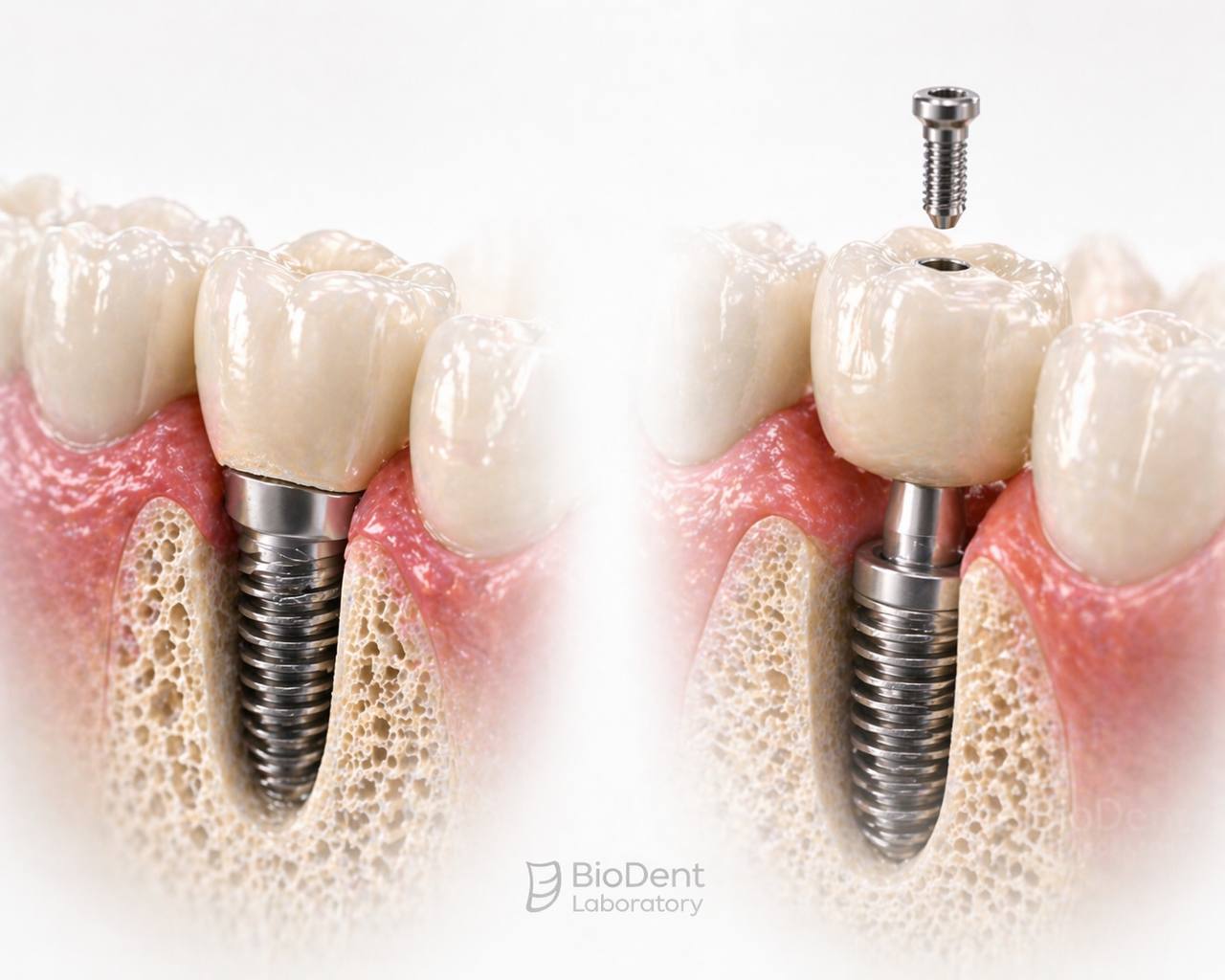
Screw-retained restorations eliminate cement-related risks, but they introduce their own set of complications.
Common issues include:
- screw loosening
- screw fracture
- access hole positioning challenges
- occlusal compromise
- esthetic limitations in anterior cases
These complications are mechanical rather than biological, but they still affect clinical outcomes.
Mechanical vs Biological Risk
One of the key differences between cement and screw retention is the type of complication risk they introduce.
Cement-retained restorations:
→ higher biological risk
Screw-retained restorations:
→ higher mechanical risk
Clinicians must decide which type of risk is more manageable in each specific case.
Crown Contour and Its Role in Complications
Crown contour plays a major role in both types of restorations.
In cement-retained cases, bulky cervical contour can trap cement and limit access.
In screw-retained cases, contour may be adjusted to accommodate the screw access channel, which can affect occlusion or anatomy.
For more on this, see Implant Crown Contour and Soft Tissue Support.
Margin Placement and Long-Term Risk
Margin placement is especially critical in cement-retained restorations.
Deep margins:
- increase cement retention risk
- reduce visibility
- complicate cleanup
- affect tissue health
Even in screw-retained cases, margin design still influences tissue behavior and maintenance.
For more on this topic, see Abutment Margin Placement in Implant Restorations.
Implant Position Influences Complication Type
Implant position often determines whether a case is better suited for screw or cement retention.
If implant angulation is unfavorable:
- screw access may be poorly positioned
- cement retention may be chosen instead
- crown contour may become compromised
This creates a chain reaction where one decision affects multiple aspects of the restoration.
For more on this, see How Implant Position Affects Abutment Choice.
Maintenance and Retrievability
One of the biggest advantages of screw-retained restorations is retrievability.
They allow:
- easy removal
- repair access
- hygiene control
- long-term maintenance
Cement-retained restorations are often more difficult to remove and adjust, especially after long-term function.
Digital Workflow Can Reduce Complications
Digital planning can help reduce both cement and screw-related complications.
It allows clinicians to:
- evaluate implant angle early
- simulate screw access
- design better crown contour
- control margin position
- coordinate abutment design
For more on this, see Digital Workflow for Implant Abutments.
How to Choose the Right Option Clinically
Choosing between cement and screw retention should be based on:
- implant position
- esthetic requirements
- tissue conditions
- hygiene accessibility
- maintenance expectations
- risk tolerance
There is no universal answer. The best option is the one that creates the most predictable long-term result.
Conclusion
Both cement-retained and screw-retained implant restorations can be successful when used correctly. However, each carries a different type of complication risk.
Understanding these risks allows clinicians to make more informed decisions, reduce complications, and create restorations that are not only functional and esthetic, but also maintainable over time.
The goal is not to avoid one method entirely, but to apply each method where it performs best.
FAQ
Are cement-retained restorations more risky?
They carry higher biological risk due to potential residual cement.
Are screw-retained restorations always better?
Not always. They may introduce mechanical and esthetic challenges.
What is the most common complication with implant crowns?
Residual cement and soft tissue inflammation are among the most common.
Does implant position affect complication risk?
Yes. Implant angulation often determines whether screw or cement retention is more appropriate.
Can digital workflow reduce complications?
Yes. It helps optimize implant planning, margin placement, and crown design.