Troubleshooting Implant Restorations
However, even well-planned implant restorations may occasionally present complications. Some problems appear at the delivery stage, while others become visible only after function, hygiene challenges, or tissue changes develop over time.
Therefore, troubleshooting implant restorations requires more than simply correcting what looks wrong. It requires understanding which part of the restorative chain created the problem in the first place. In many cases, the visible issue is only the final expression of an earlier planning or design decision.
This page explains the most common restorative problems seen in implant cases and shows how dentists can identify the likely cause, evaluate the restorative system more effectively, and respond with better clinical solutions.
Why Implant Restorations Need a Troubleshooting Framework
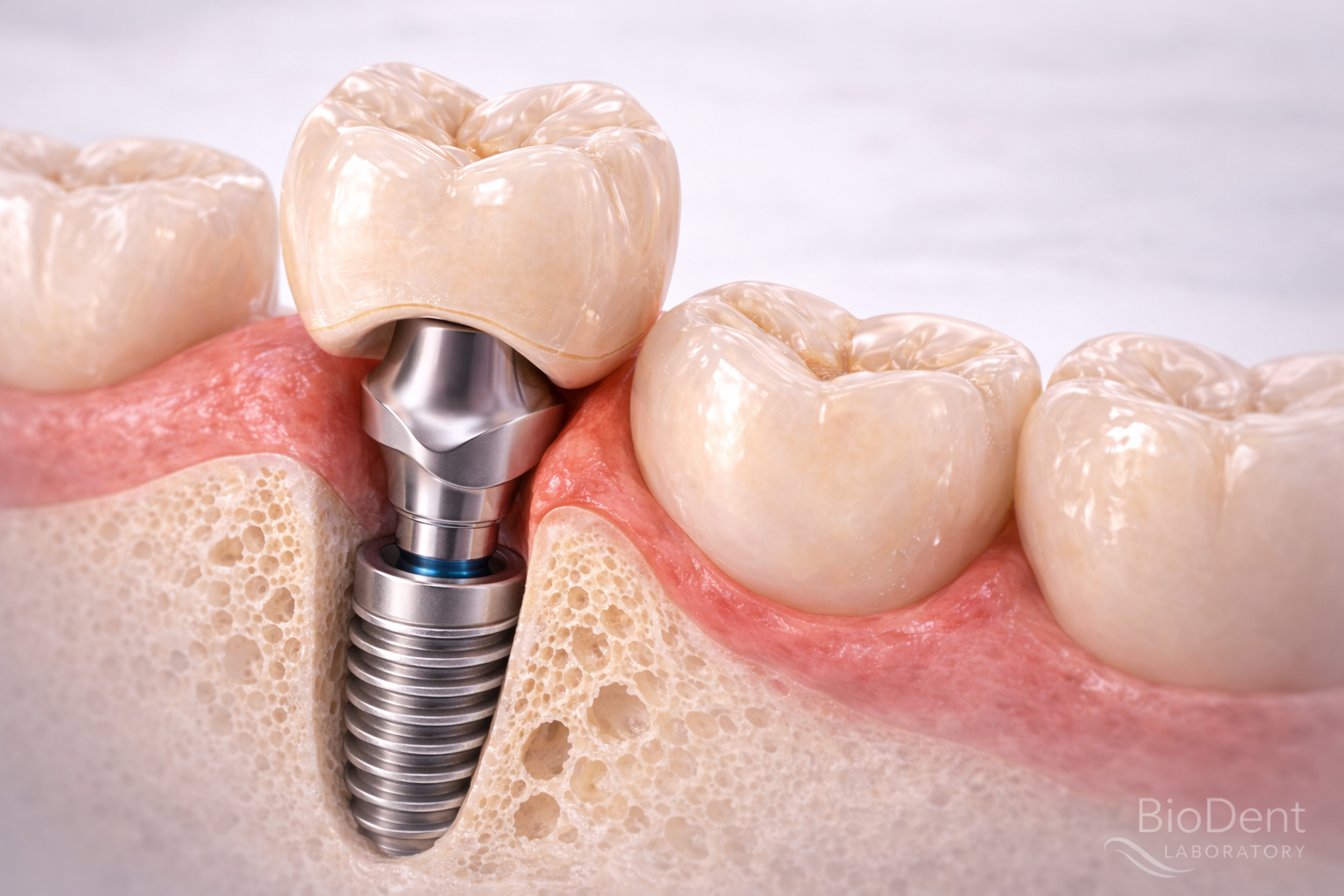
A restoration problem is rarely isolated to a single component. What appears to be a crown issue may actually relate to implant position, abutment choice, margin depth, tissue instability, or retention strategy.
This is why troubleshooting works best when the clinician evaluates the full restorative chain:
- implant position
- tissue condition
- abutment design
- crown contour
- emergence profile
- retention method
- occlusion
- maintenance access
When the evaluation is too narrow, the same problem may reappear later in a different form.
For a broader overview of restorative planning logic, see Implant Prosthetic Planning Workflow.
Problem 1: The Crown Does Not Seat Fully
One of the most common delivery-stage problems is a crown that does not seat fully or seats with resistance.
Possible causes include:
- incomplete abutment seating
- internal restoration misfit
- debris inside the crown
- scan or model inaccuracies
- design mismatch between crown and abutment
- distortion in the restorative workflow
The first step is to determine whether the issue is mechanical, design-related, or workflow-related. In many cases, full seating problems originate earlier in the case than expected.
For more on delivery-stage verification, see Implant Crown Delivery Protocol for Dentists.
Problem 2: Soft Tissue Looks Inflamed After Delivery
If tissue becomes inflamed shortly after crown delivery, the clinician should immediately consider biologic irritants rather than assuming that healing simply needs more time.
Possible causes include:
- excess cement
- overcontoured cervical crown shape
- poor emergence profile
- subgingival margin placement
- inadequate hygiene access
- tissue pressure from restorative form
Soft tissue inflammation often points to a restoration that is difficult to clean or biologically unfriendly in the cervical zone.
For related topics, see: Cement Removal Around Implant Crowns and Soft Tissue Management Around Dental Implants.
Problem 3: The Crown Looks Too Bulky or Unnatural
A crown that looks bulky often reflects a deeper restorative issue rather than a simple esthetic problem.
Possible causes include:
- implant positioned too facially
- stock abutment used in a contour-sensitive case
- poor emergence profile planning
- excessive cervical volume
- tissue that was not shaped properly during healing
When a restoration looks overbuilt, it usually means the final crown is compensating for something that should have been addressed earlier by implant placement, abutment design, or soft tissue shaping.
For more on this, see: Implant Crown Contour and Soft Tissue Support and How Implant Position Affects Abutment Choice.
Problem 4: The Restoration Is Difficult to Clean
A restoration that cannot be cleaned well is a long-term problem, even if it initially looks acceptable.
Common causes include:
- overcontoured cervical anatomy
- poor emergence profile
- deep subgingival margins
- tissue compression
- inaccessible posterior geometry
- inappropriate restorative contour relative to the patient’s hygiene ability
This issue is especially important because it often leads to later biologic complications if not corrected early.
For more on hygiene-sensitive design, see Implant Abutments for Posterior Restorations.
Problem 5: Occlusal Overload or Functional Discomfort
If the patient reports pressure, bite discomfort, or repeated restorative stress, occlusion should be reviewed carefully.
Potential causes include:
- heavy contact on the implant crown
- poor force distribution
- excessive cusp anatomy
- narrow restorative space handled incorrectly
- parafunctional habits
- posterior load not accounted for during planning
Implants do not respond to occlusal stress the same way as natural teeth. This makes occlusal refinement especially important in posterior and function-heavy cases.
Problem 6: Margin Access Is Too Difficult
When margin access is poor, multiple downstream problems become more likely:
- incomplete cement removal
- tissue irritation
- difficult maintenance
- patient hygiene limitations
- higher long-term biologic risk
Poor margin access is often caused by a combination of implant depth, abutment design, and restorative planning.
For more on this, see Abutment Margin Placement in Implant Restorations.
Problem 7: The Restoration Feels Technically Correct but Esthetically Off
Sometimes a restoration appears clinically acceptable from a technical perspective but still does not look convincing in the mouth. This usually happens in the esthetic zone.
Possible causes include:
- incorrect tissue support
- wrong material selection
- poor cervical transition
- asymmetrical contour
- inadequate crown translucency or shape
- abutment influencing the visual outcome
In these cases, the solution is often not a simple shade correction. The problem may sit deeper in the restorative architecture.
For related reading, see: Implant Abutments in the Esthetic Zone and Titanium vs Zirconia Abutments.
Problem 8: Repeated Minor Issues Keep Appearing
Sometimes no major failure is present, but the case repeatedly needs small corrections:
- minor tissue irritation
- repeated cement concerns
- recurrent hygiene problems
- slight occlusal adjustments
- esthetic dissatisfaction
- maintenance inconvenience
This often means the restoration is functioning, but not harmoniously. In those cases, troubleshooting should focus on the overall design logic rather than only on the most recent symptom.
A Better Way to Troubleshoot: Trace the Problem Backward
A useful troubleshooting method is to trace the problem backward through the restorative workflow.
Ask:
- is this a delivery problem or a planning problem?
- is the issue caused by contour, tissue, retention, or fit?
- is the crown compensating for implant position?
- is the abutment limiting the restoration?
- was the case designed around the final crown or around a generic component?
- does the restoration support long-term maintenance?
This type of analysis often leads to better decisions than simply adjusting what looks wrong in the moment.
Digital Workflow Can Improve Troubleshooting
Digital workflow can also help in troubleshooting because it allows the restorative team to review design logic more clearly.
Digital records may help evaluate:
- implant position
- crown contour
- emergence profile
- abutment design
- margin placement
- screw access
- case communication history
This can make it easier to identify whether the problem began in planning, scanning, design, or delivery.
For more on this, see Digital Communication Between Clinic and Dental Lab and Digital Workflow for Implant Abutments.
Common Troubleshooting Mistakes
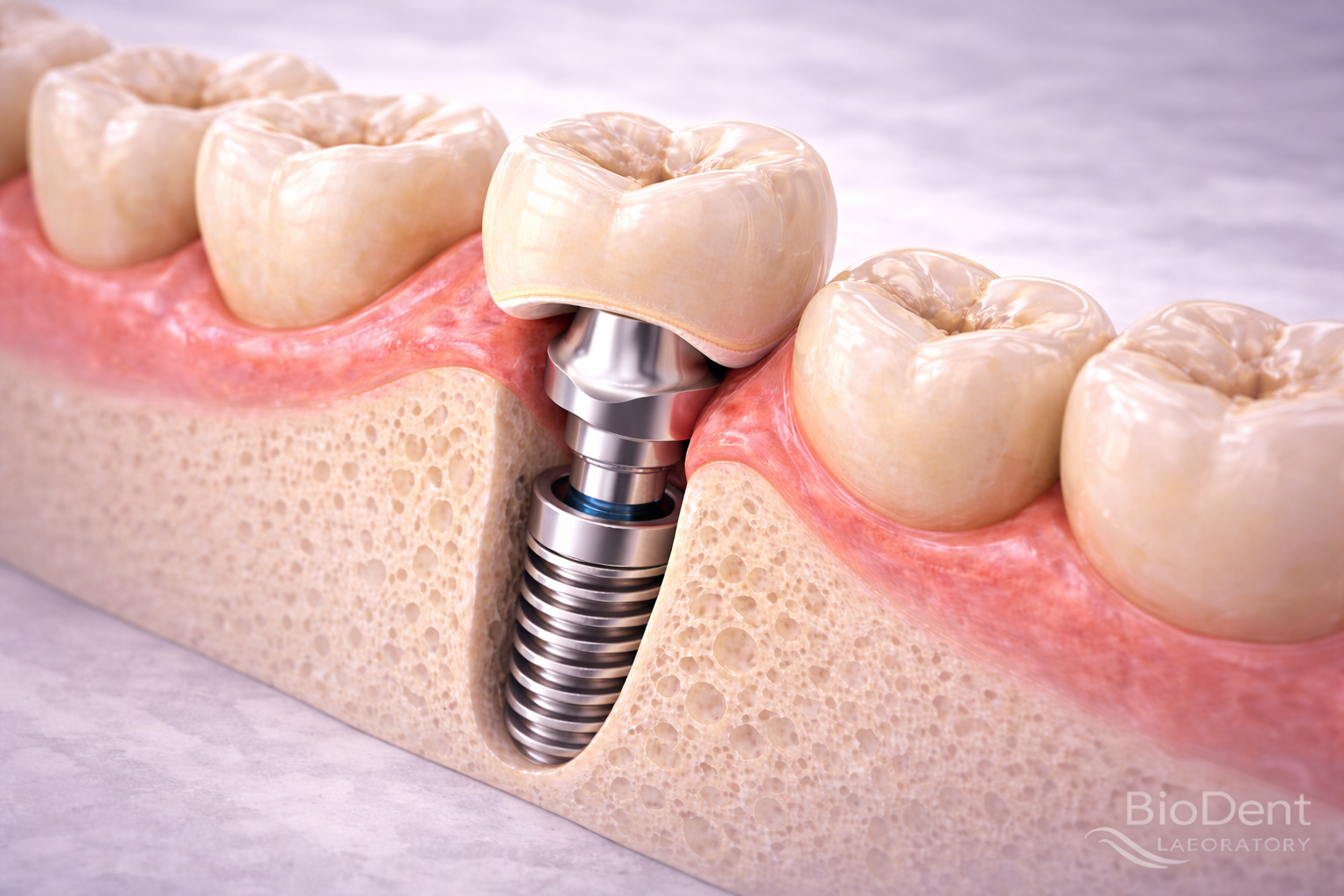
Some common errors make implant troubleshooting less effective:
- treating symptoms without finding the source
- blaming one component without reviewing the full system
- ignoring tissue behavior
- overlooking hygiene access
- focusing only on esthetics or only on mechanics
- assuming a small problem does not matter long-term
A restoration may continue functioning despite these issues, but usually with reduced predictability and greater biologic or maintenance risk.
Conclusion
Therefore, troubleshooting implant restorations is most effective when the clinician evaluates the full restorative chain rather than the visible symptom alone.
In addition, most implant complications can be understood more clearly when reviewed through the logic of implant position, soft tissue, abutment design, crown contour, margin control, retention, and maintenance access.
Finally, the best troubleshooting approach is not only corrective but also preventive. Every restored case becomes stronger when clinicians recognize and address small restorative problems before they develop into larger biologic or functional complications.
FAQ
What is the most common cause of implant restoration complications?
Often it is not one isolated issue, but a combination of planning, contour, margin, retention, and tissue-related decisions.
Why might an implant crown not seat fully?
Possible causes include abutment misfit, debris, scan inaccuracy, or design mismatch between the crown and abutment.
Can soft tissue inflammation be caused by the restoration itself?
Yes. Excess cement, poor contour, deep margins, and limited hygiene access may all contribute.
Why does a crown sometimes look bulky even when it fits?
How should dentists troubleshoot an implant case more effectively?
By tracing the visible problem backward through implant position, tissue support, abutment design, crown contour, retention, and maintenance access.
Can digital workflow help solve implant restoration problems?
Yes. It can improve analysis of design, communication, fit logic, and restorative sequencing.