How to Design Cleanable Implant Restorations
One of the most overlooked aspects of implant dentistry is how easily a restoration can be cleaned after it is delivered. A restoration may look excellent and function well initially, but if it cannot be maintained properly by the patient, long-term complications become much more likely.
Cleanability is not something that can be added at the end of treatment. It must be designed into the restoration from the beginning. Crown contour, emergence profile, margin placement, and implant position all influence whether the patient will be able to maintain proper hygiene.
This page explains how to design implant restorations that are not only esthetic and functional, but also cleanable and biologically stable over time.
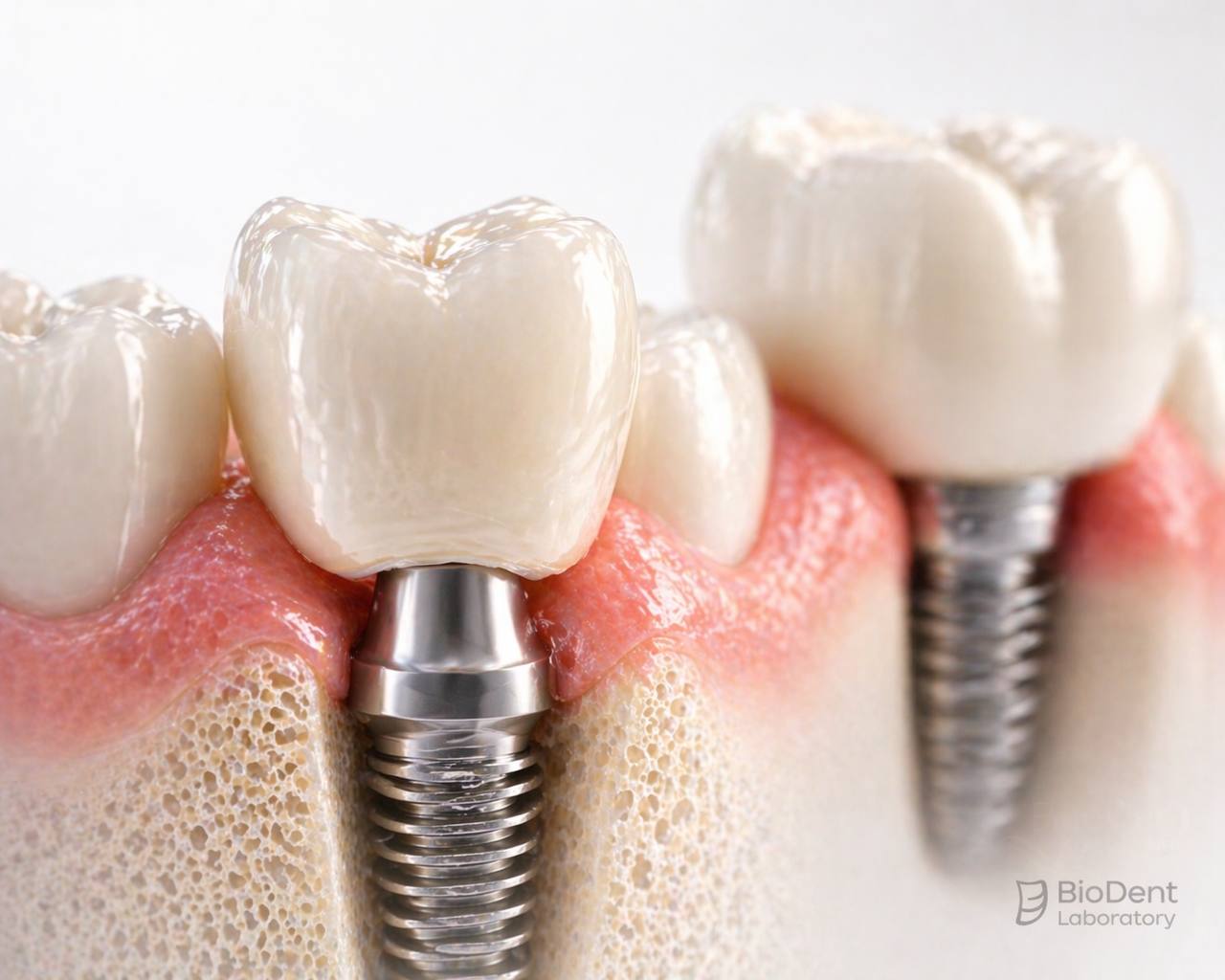
Why Cleanability Is Critical for Long-Term Success
Many implant complications are not caused by surgical failure or material problems, but by inadequate hygiene access.
When patients cannot clean around the implant properly, plaque accumulates and leads to:
- soft tissue inflammation
- bleeding
- peri-implant mucositis
- long-term bone loss
- restoration failure
Even a perfectly executed restoration can fail biologically if hygiene is compromised.
For more on inflammation-related complications, see Peri-Implant Inflammation: Causes and Prevention.
Crown Contour: The Most Important Factor
Crown contour plays the biggest role in cleanability.
If the cervical part of the crown is too bulky or convex, it creates areas where plaque accumulates and where cleaning tools cannot reach effectively.
Proper crown contour should:
- allow smooth transition from crown to tissue
- avoid excessive bulk in the cervical area
- support tissue without compressing it
- create space for hygiene tools
For more on contour design, see Implant Crown Contour and Soft Tissue Support.
Emergence Profile and Hygiene Access
Emergence profile affects how the crown exits the tissue and how accessible the area is for cleaning.
If the emergence profile is too steep or abrupt, it can create a narrow, inaccessible zone near the gingiva.
A well-designed emergence profile:
- supports tissue naturally
- creates a cleanable transition
- avoids plaque-retentive areas
- improves long-term maintenance
For more details, see Implant Emergence Profile.
Margin Placement and Accessibility
Margins that are placed too deep are one of the biggest obstacles to hygiene.
When margins are subgingival:
- cleaning becomes more difficult
- plaque accumulation increases
- inflammation risk rises
- cement removal becomes less predictable
Accessible margins improve both professional maintenance and patient hygiene.
For more on this topic, see Abutment Margin Placement in Implant Restorations.
Implant Position and Its Effect on Hygiene
Implant position determines how the final crown must be shaped.
If the implant is positioned incorrectly:
- the crown may need to be overcontoured
- hygiene access may be reduced
- emergence profile may become unnatural
- tissue response may be compromised
Proper implant positioning simplifies restorative design and improves cleanability.
For more on this, see How Implant Position Affects Abutment Choice.
Posterior Cases Are More Challenging
Posterior implant restorations are often harder to clean because of:
- limited access
- reduced visibility
- wider crown anatomy
- stronger occlusal demands
This makes cleanable design even more important in posterior regions.
For more on posterior cases, see Implant Abutments for Posterior Restorations.
Cement vs Screw and Hygiene
Retention method also affects cleanability.
Cement-retained restorations may introduce cement-related complications that affect hygiene and tissue health.
Screw-retained restorations eliminate cement risk but require proper planning of access and contour.
For more on this, see Implant Crown Complications: Cement vs Screw Issues.
Soft Tissue Design Supports Cleanability
Soft tissue should be shaped in a way that supports hygiene.
If tissue is compressed or poorly adapted, it may:
- trap plaque
- become inflamed
- limit cleaning access
- destabilize over time
Proper tissue management supports both esthetics and hygiene.
For more on this, see Soft Tissue Management Around Dental Implants.
Digital Workflow Helps Optimize Hygiene Design
Digital planning makes it easier to evaluate cleanability before the restoration is fabricated.
It allows clinicians to:
- visualize crown contour
- adjust emergence profile
- control margin position
- simulate final restoration
- improve communication with the lab
This reduces the risk of creating a restoration that is difficult to maintain.
For more on this, see Digital Workflow for Implant Abutments.
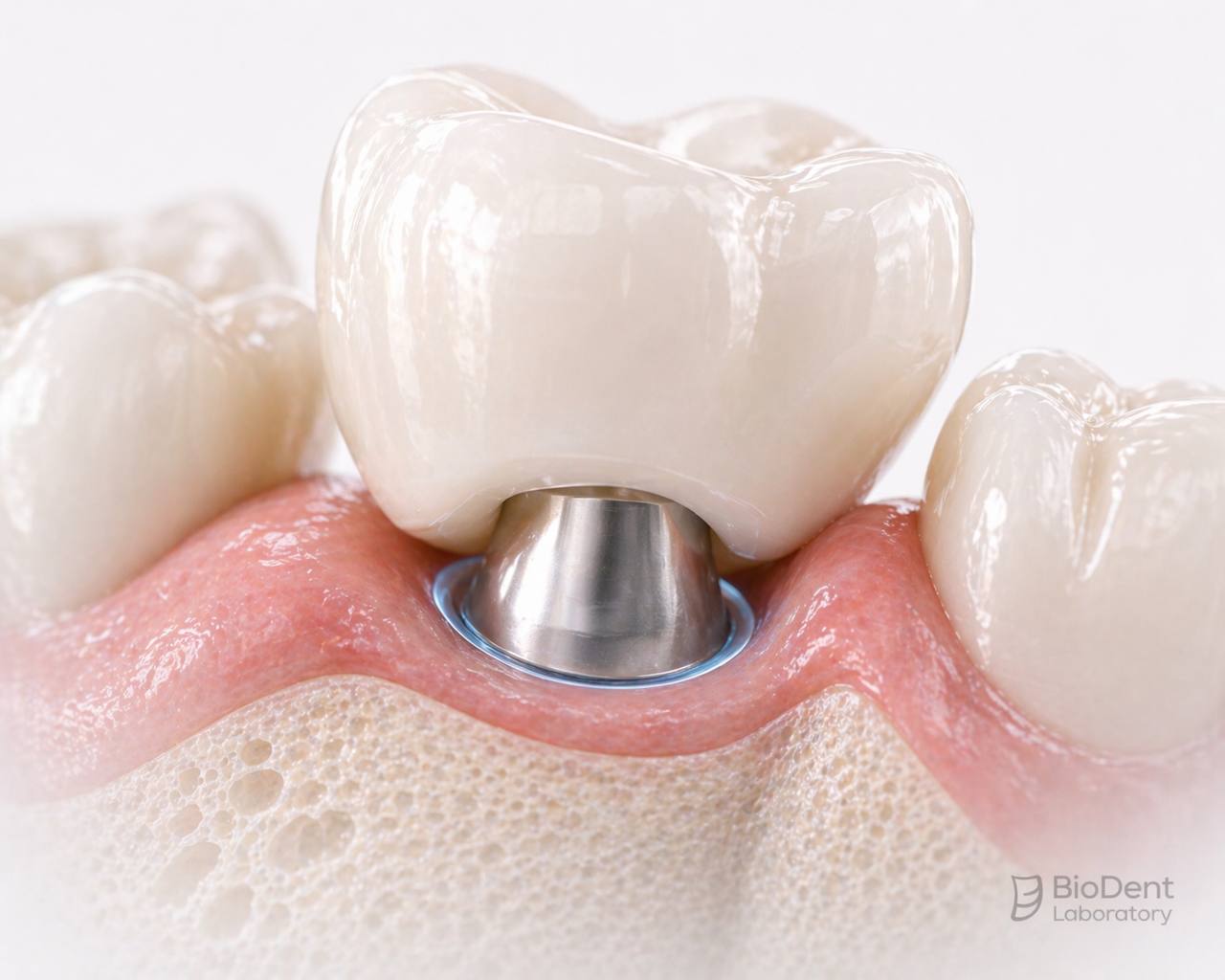
Practical Design Rules for Cleanable Restorations
To improve cleanability, clinicians should:
- avoid bulky cervical contours
- design smooth emergence profiles
- place margins accessibly
- evaluate implant position early
- consider hygiene tools during planning
- communicate clearly with the lab
- test access during delivery
These steps significantly reduce long-term complications.
Conclusion
Cleanable implant restorations are not only easier for patients to maintain, but also more stable biologically over time.
By focusing on contour, emergence profile, margin placement, and implant position, clinicians can design restorations that support both function and hygiene.
The best implant restoration is not only the one that looks good at delivery, but the one that remains healthy and maintainable for years.
FAQ
Why is cleanability important in implant restorations?
Because poor hygiene access leads to plaque accumulation and biological complications.
What is the biggest design mistake affecting hygiene?
Overcontoured crown shape in the cervical area.
Do deep margins affect hygiene?
Yes. They reduce accessibility and increase inflammation risk.
Does implant position affect cleanability?
Yes. It often determines how the crown must be shaped.
Can digital workflow improve hygiene design?
Yes. It allows better planning before fabrication.